Leave Your Message
0%

Picking the best Commercial Electric Vehicle Chargers from China isn’t just about looking at charging speeds. Fleet managers need reliable hardware, straightforward software, and support that actually sticks around after installation. Sure, a charger might look sleek and impressive at first glance, but the real test comes during those chilly winter mornings, busy delivery hours, or when you’ve got to rely on it day in and day out.

Nowadays, Chinese manufacturers offer some solid options suitable for depots, shopping centers, hotels, and highway stations. Brands like Star Charge, TELD, BYD, Sinexcel, and Autel Energy cater to different needs. Their products range from basic AC chargers for workplaces, to high-power DC systems, including features like load management, payment platforms, and remote diagnostics. Figuring out what’s right for you really depends on things like how often vehicles need charging, what your grid can handle, how long vehicles stay parked, and how easy it is to maintain the equipment. For example, a 22 kW AC charger might do the trick for staff parking, but a 180 kW DC charger probably makes more sense if you’re managing a busy delivery fleet.

When evaluating technical specs, pay attention to connector compatibility, enclosure protection, thermal management, uptime records, firmware updates, and warranty details. It’s a good idea to ask for test reports, get references from other operators, and find out how quickly they respond to service issues. Don’t forget to chat with folks who actually use this stuff every day — their feedback often uncovers things like cable wear, screen malfunctions, or software glitches that brochures typically gloss over.

Of course, price matters. But don’t jump for the cheapest option without thinking it through—that cheaper charger might end up costing you more in the long run, due to higher operating expenses. Also, installation quality counts just as much as the hardware itself. Remember, performance can vary depending on your local climate, grid conditions, and how you set things up. So, it’s smart to compare verified field data, not just marketing brochures. This guide aims to give you a practical look at top Chinese suppliers, helping you balance performance, reliability, support, and long-term value — because making the right choice is all about the bigger picture.
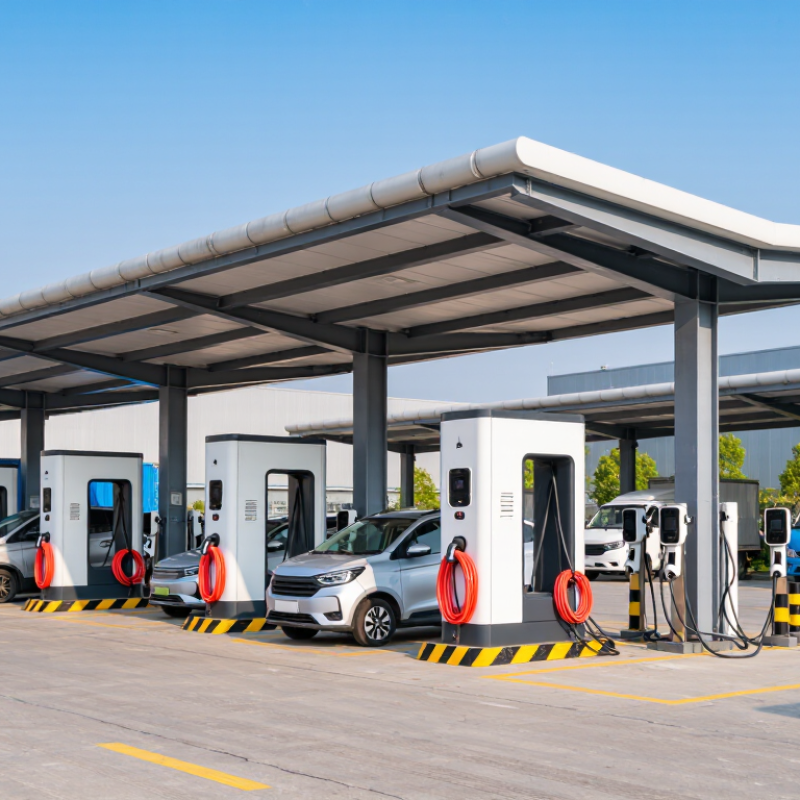
What Are the Best Commercial EV Chargers From China?

China’s Market Scale: Over 60% of Global Public Chargers, IEA 2023

China’s charging market is difficult to overlook. The International Energy Agency’s Global EV Outlook 2023 reported that China held over 60% of global public chargers in 2022. It also recorded roughly 1.8 million public charging points nationwide. This scale supports faster equipment development, broader component supply, and more competitive commercial pricing.

The best Chinese commercial EV chargers are not defined by output alone. A depot may need reliable 60–180 kW DC units, while highway sites often require higher power and liquid-cooled cables. Strong options should support OCPP communication, remote monitoring, load balancing, and clear fault records. China’s Electric Vehicle Charging Infrastructure Promotion Alliance reported more than 2.7 million public chargers by the end of 2023. Growth is substantial. Yet rapid expansion can hide uneven maintenance and site-level uptime.

Look beyond the cabinet.

IEC-based safety testing, ingress protection, surge protection, and verified thermal performance deserve close review. Field trials matter more than impressive brochures. Operators should test charging reliability during rain, winter mornings, and simultaneous vehicle use. This is where some assumptions fail. A low purchase price may bring higher service costs later. Certification coverage, spare-part access, software support, and local technicians should therefore be checked before deployment. Reports show market strength, but each project still needs independent validation.

What Are the Best Commercial EV Chargers From China?

China’s public charging infrastructure accounted for more than 60% of the global stock in 2022, according to the IEA Global EV Outlook 2023.

Estimated public charging points in 2022: China approximately 1.8 million; Europe approximately 460,000; the United States approximately 130,000; other markets approximately 310,000. Source: International Energy Agency, Global EV Outlook 2023.

AC vs. DC Output: Compare 7–22 kW AC and 60–480 kW DC Chargers

For commercial buyers, the best Chinese EV charger depends on traffic patterns, not headline power. AC chargers from 7–22 kW suit offices, hotels, depots, and overnight parking. A 7 kW unit adds roughly 7 kWh per hour. A 22 kW unit can add three times more, but only when the vehicle supports three-phase AC charging. The IEA’s Global EV Outlook 2024 reported more than four million public charging points worldwide by the end of 2023. That growth highlights a practical point: many vehicles remain parked longer than they drive.

DC chargers from 60–180 kW fit retail sites and regional fleets. Units from 240–480 kW better serve highway corridors, buses, and heavy-duty vehicles. They reduce charging time, but demand stronger transformers, larger cables, careful cooling, and higher installation budgets.

NREL’s 2030 National Charging Network study also shows that future demand requires both widespread lower-power charging and concentrated fast-charging hubs. Bigger is not always better.

For Commercial electric vehicle chargers wholesale, request verified output curves, efficiency data, connector options, payment protocols, and local certification records. Ask how the unit performs at 40°C, not only in a showroom. Field experience suggests cable handling and software stability can matter more than peak kilowatts. IEA data supports rapid infrastructure expansion, yet grid capacity remains an uneven constraint. That part is easy to underestimate. A realistic site survey should come before any bulk order.

Standards Check: GB/T 20234, CCS2, ISO 15118, and OCPP 2.0.1

Choosing Commercial Electric Car Chargers from China requires more than comparing power ratings. Standards determine whether equipment works reliably with local vehicles, software, and payment systems. GB/T 20234 remains important for mainland China, covering charging connectors and communication requirements. CCS2 is widely used across Europe and several international markets. They are not interchangeable without careful technical verification.

In practical installations, ISO 15118 can support vehicle identification, smart charging, and future plug-and-charge functions. However, actual performance depends on vehicle compatibility, certificates, and software configuration. OCPP 2.0.1 helps connect chargers with backend platforms. It supports diagnostics, device management, and smarter energy control. A charger may claim compliance, yet field testing can reveal communication delays or incomplete functions. That gap deserves attention.

Tips: Request complete test reports, connector drawings, and protocol logs before purchasing. Check whether the supplier supports local grid requirements and maintenance procedures. Test one unit with your target vehicles first. Also confirm firmware update methods and cybersecurity controls. Standards evolve, and a specification sheet can become outdated quickly. I would not rely on a single certificate alone. Witnessing interoperability tests is slower, but it prevents expensive surprises after installation.

Reliability Metrics: Require at Least 95% Uptime for Commercial Sites

When evaluating the best commercial EV chargers from China, uptime should lead the shortlist. For commercial sites, require at least 95% uptime, measured over a defined period. This metric must include failed sessions, not only powered-on hours. A charger that looks available but rejects payment is not truly available. Commercial Car Chargers should record session starts, interruptions, error codes, and recovery times. Ask for 12-month field data from comparable climates and traffic levels. Short demos are useful, but they cannot prove durability.

Site testing needs physical detail. Run chargers through peak hours, rain, heat, and repeated plug cycles. Check cable strain, connector locking, screen response, and emergency-stop recovery. Measure output stability during simultaneous charging. A practical acceptance test can require 95% uptime for 30 to 90 days before full deployment. Keep one spare power module or connector where downtime is expensive. Remote diagnostics should identify electrical, network, or user-related faults. Service response matters as much as hardware design. A two-hour repair promise means little without local parts and trained technicians.

Review uptime independently from raw logs. Exclude planned maintenance only when it is scheduled and documented. Be cautious with perfect claims. They may reflect limited samples, not reliable engineering. No spreadsheet is perfect. I would inspect a failed unit, if possible. The evidence is often less polished there. Manufacturing quality can vary with factory controls, firmware testing, and after-sales discipline. Require serial-level reports, update procedures, and clear warranty terms. Look for agreement between the data and actual field behavior.

Efficiency and Safety: Evaluate 94%+ Efficiency, IP54, and IK10 Ratings

Choosing a commercial EV charger from China requires more than comparing output power or purchase price. In daily fleet operations, efficiency directly affects energy costs and charging time. A unit rated above 94% efficiency can reduce losses during high-volume charging. However, confirm how the figure was measured. Some results apply only at rated load, stable voltage, and ideal temperature.

IP54 protection suits many parking areas because it limits dust entry and resists water splashes from several directions. It does not mean the charger can tolerate pressure washing or flooding.

IK10 impact protection is also valuable in public sites. The housing can withstand substantial mechanical impact, but damaged cables or screens still create risks. Inspect them regularly.

Look closely at test records.

Reliable suppliers should provide traceable efficiency data, insulation tests, temperature reports, and protection-function verification. During commissioning, measure voltage, grounding continuity, connector temperature, and charging stability. A qualified local electrician should confirm installation requirements and applicable safety rules.

In my experience, clear maintenance access matters almost as much as the rating label. A charger may perform well in a factory test yet struggle beside a dusty warehouse. Ventilation, cable handling, and software updates need practical attention. I would also request sample field data, not only laboratory claims. Numbers help. Site evidence matters more.

Total Cost of Ownership: Compare CAPEX, Energy Loss, Software, and Service

Choosing Commercial Ev Car Chargers from China requires more than comparing invoice prices. CAPEX includes cabinets, dispensers, cables, civil works, grid upgrades, and commissioning. A low quote can become expensive beside a transformer trench. The IEA’s Global EV Outlook 2024 reports that China held over 60% of the world’s public charging points in 2023. This scale supports competitive pricing, but specifications still vary. Hardware savings matter only when output remains stable during peak demand.

Energy loss quietly reshapes total cost of ownership. Metered input and delivered battery energy should be compared monthly. Even a small efficiency gap becomes significant across thousands of charging sessions. Software adds another layer. Check cloud fees, payment integration, remote diagnostics, firmware support, and OCPP compatibility. J.D. Power’s 2024 U.S. EVX Public Charging Study found that 20% of respondents experienced charging-site failures. That figure should encourage serious uptime planning. Service response time matters more than a polished dashboard. A practical mistake is forecasting maintenance from the warranty period alone. Cable wear, cooling fans, contactors, and payment hardware may fail earlier.

Tips: Request a five-year TCO model, not only a purchase quote. Include electricity losses, demand charges, software subscriptions, spare parts, technician travel, and downtime. Ask for measured efficiency at 25%, 50%, and full load. Require clear service-level targets. Chinese Commercial Ev Car Chargers can be cost-effective, but assumptions must be tested against real site data. Percentage estimates often look precise. They are not.

FAQS

Why is China’s commercial EV charging market significant?

China had over 60% of global public chargers in 2022. It also had roughly 1.8 million public charging points. A large supply chain can support faster development and more competitive pricing.

What power level suits a commercial charging depot?

Many depots may need reliable 60–180 kW DC chargers. Highway locations often require higher power and liquid-cooled cables. Vehicle schedules should guide the choice.

Which software features should commercial chargers support?

Look for OCPP communication, remote monitoring, load balancing, and clear fault records. These tools help operators track charging sessions and respond to failures. Software support can still vary between sites.

Are high efficiency ratings enough when choosing a charger?

No. A charger above 94% efficiency may reduce energy losses. However, check the testing conditions carefully. The result may apply only at rated load, stable voltage, and ideal temperature.

What does an IP54 rating mean for outdoor chargers?

IP54 limits dust entry and resists water splashes from several directions. It does not protect against flooding or pressure washing. Placement still matters.

Why is IK10 protection useful in public charging areas?

IK10 protection helps the housing resist substantial mechanical impact. It does not make damaged cables or screens safe. Inspect visible parts regularly.

What safety records should suppliers provide?

Request traceable efficiency data, insulation tests, temperature reports, and protection-function checks. During commissioning, measure grounding continuity, connector temperature, and charging stability. Brochures alone are not enough.

How can operators test real-world charging reliability?

Run trials during rain, cold mornings, and simultaneous vehicle use. Check ventilation, cable handling, and maintenance access beside the actual warehouse or parking area. Laboratory results can mislead.

What hidden costs should buyers consider?

A low purchase price may lead to higher service costs later. Check spare-part access, software updates, local technicians, and certification coverage. I might underestimate site differences, so independent validation remains wise.

Conclusion

China has become a major force in the global charging market, accounting for more than 60% of public chargers according to the 2023 IEA reference in the outline. When selecting commercial electric vehicle chargers, operators should first match power output to site needs: 7–22 kW AC units suit longer parking periods, while 60–480 kW DC systems support rapid charging and higher vehicle turnover. Compatibility is equally important, so buyers should review GB/T 20234, CCS2, ISO 15118, and OCPP 2.0.1 support before deployment.

Long-term performance depends on more than charging speed. Commercial sites should target at least 95% uptime, energy efficiency above 94%, and durable protection such as IP54 and IK10 ratings. A complete total-cost-of-ownership assessment should include equipment investment, energy losses, software subscriptions, maintenance, spare parts, and service response. The best solution is therefore one that balances standards compatibility, dependable operation, safety, scalability, and predictable lifetime costs rather than focusing only on initial purchase price.
Amelia

Amelia

Amelia is a dedicated professional at Fuzhou Yuanjin Chuaneng Technology Co., Ltd., where she serves as a marketing specialist. With her extensive knowledge of the company's innovative products and services, Amelia plays a vital role in showcasing the core business offerings and unique advantages......
Previous Best EV Charging Station Manufacturers in 2026