Leave Your Message
0%

Picking the best EV charging station manufacturer in 2026 isn't just about glancing at the headline speeds. According to the International Energy Agency’s Global EV Outlook 2025, there were over five million public charging points around the world in 2024 — and that number grew by about 1.3 million in that year alone. You can see more chargers popping up at highway rest stops, office parking lots, and even residential areas. But honestly, having more chargers doesn’t automatically mean you’ll get reliable service all the time.

So, in this guide, I’ve looked at different EV charging station brands based on real-world, practical criteria — things like whether they offer AC and DC options, compatibility with various connectors, how their network management works, what kind of warranty they provide, and how good their support is for installation and maintenance. I’ve included some of the big names you’ve probably heard of, like ABB E-mobility, Siemens, Schneider Electric, ChargePoint, and Wallbox. Keep in mind, though, that product availability and service quality can really vary depending on where you are. If you're comparing options for commercial charging stations, like this list, it’s crucial to remember that real-world conditions matter a lot. Just because a charger performs well in a lab or a test doesn’t mean it’ll hold up equally well in the heat, rain, or when it’s heavily used — or if repairs get delayed.

The stats from the IEA tell us how many chargers are out there, not how often they’re actually working or how happy customers are. That’s an important difference. Manufacturer specs are helpful, but they don’t tell the whole story. This overview pulls together info from official company sources and industry reports, and I’ve pointed out where you should double-check claims directly with the makers. No single brand is perfect for every situation — the right pick really depends on your site’s capacity, expected traffic volume, your budget, and how easy it is to get local tech support. Even if you do all the homework, there’s still some uncertainty — and that’s worth paying attention to rather than making a guess and hoping for the best.
Best EV Charging Station Manufacturers in 2026

Set the 2026 Market Baseline: Over 5 Million Public Chargers in 2024

The public charging network crossed an important threshold in 2024. The International Energy Agency’s Global EV Outlook 2025 reports more than five million public charging points worldwide. It also records over 1.3 million new public points added that year. That is a vast network, but the headline figure does not show whether chargers are reliable, available, or easy to use.

For buyers comparing charging station manufacturers, the baseline matters. A station beside a busy highway faces different demands from one in a quiet office car park. Check independently tested output, uptime reporting, weather protection, and support for common charging standards. Ask how faults are diagnosed and how replacement parts reach remote sites. Small details matter: a damaged cable or unclear screen can turn a short stop into a frustrating delay. The IEA’s global count is useful context, not proof that every region has adequate coverage. Some gaps remain, and the data can hide them.

Tips: Request field-performance data from comparable installations. Check maintenance response times, software update policies, and spare-parts availability. A low purchase price may look attractive; the long-term service plan deserves equal scrutiny.

Classify Manufacturers by AC, DC Fast-Charging, and Power Output

Best EV Charging Station Manufacturers in 2026

Commercial Electric Car Charging Stations Manufacturers are best compared by charging method, not appearance.

AC manufacturers typically supply Level 2 equipment for offices, apartments, hotels, and fleet depots. These units often deliver 7 to 22 kW. They are slower, but installation costs can be lower. AC charging also suits vehicles parked for several hours.

DC fast-charging manufacturers focus on rapid energy delivery. Their equipment commonly ranges from 30 to 180 kW. Higher-output systems can exceed 300 kW when grid capacity and vehicle compatibility allow it. These stations need stronger electrical infrastructure, thermal management, and careful load balancing. They also require more demanding maintenance planning.

Power output should match real operating patterns. A workplace may need several moderate-power AC ports instead of one oversized DC charger. A highway site usually needs durable DC units, clear cable handling, and reliable payment systems.

Field assessments often reveal a simple problem: the highest-rated charger is not always the most useful.

It may remain underused while demand charges rise. That choice deserves scrutiny. Manufacturers with strong testing procedures, transparent efficiency data, remote diagnostics, and accessible service support are more dependable.

Still, specifications can hide weaknesses. Cold weather, long cables, software delays, and shared power limits may reduce actual performance. Buyers should examine measured output, warranty terms, replacement procedures, and local technical support before selecting equipment.

Assess Reliability Against the U.S. 97% Uptime Rule for Funded Chargers

Best EV Charging Station Manufacturers in 2026

For federally funded chargers, reliability is no longer a marketing phrase. It is a measurable operating duty. U.S. funding rules commonly require at least 97% annual uptime for each charging port. That allows roughly 10.95 days of downtime yearly. A dark screen, failed payment reader, or locked connector can count against performance.

Electric Car Charging Stations Manufacturers should prove uptime through independent monitoring, service records, and clear incident logs. Buyers should inspect response times, replacement-part access, software recovery, and technician coverage. A charger may look impressive in a showroom. It must also work during freezing mornings, heavy rain, and holiday traffic. Remote diagnostics can identify faults quickly, but remote access cannot repair every damaged cable.

Field testing reveals uncomfortable details. Some units restart successfully, yet remain unavailable for several minutes. That delay may seem minor, but repeated outages can reduce annual performance below the threshold. Operators should request port-level reports, not broad network averages. They should also review how planned maintenance and communication failures are recorded. The 97% target sounds simple. Measuring it correctly is not. My assessment would include a live site visit, transaction tests, and a review of twelve months of service data before selecting equipment.

Compare CCS and NACS Support, Plus OCPP 2.0.1 Interoperability

Choosing the best EV charging station manufacturers in 2026 requires more than comparing charging speed. CCS and NACS support can determine whether a station serves today’s vehicles and tomorrow’s fleet. CCS often suits mixed commercial sites, while NACS can simplify access for vehicles using that connector. A charger with both options may reduce driver confusion, but dual-cable designs can increase cabinet size, maintenance needs, and installation costs.

In charger evaluations, I check the connector latch, cable weight, screen visibility, and performance after repeated sessions. Small details matter. A cold cable can become stiff. A poorly placed display can frustrate drivers in bright sunlight. Manufacturers should publish tested power curves, thermal limits, and firmware policies, not just peak output figures. I have also seen buyers assume connector compatibility means full interoperability. It does not.

OCPP 2.0.1 support adds stronger communication between chargers, management platforms, and payment systems. It can improve smart charging, device monitoring, transaction handling, and remote diagnostics. However, “OCPP 2.0.1 compatible” needs verification. Vendors may support different profiles or optional functions. Buyers should request a conformance statement, test results, and a live integration trial. For Rfid Ev Charger Manufacturers, reliable RFID authentication should work during weak network conditions and record clear event logs. Testing should include offline authorization, session recovery, and firmware rollback. Standards help, but implementation quality still varies.

Best EV Charging Station Manufacturers in 2026 — Compare CCS and NACS Support, Plus OCPP 2.0.1 Interoperability
Comparison dimension What to look for CCS support NACS / SAE J3400 support OCPP 2.0.1 interoperability Buyer verification
Connector availability Confirm the connector and cable configuration for each exact charger model and market. CCS1 is widely used for DC fast charging in North America; CCS2 is common in many other regions. SAE J3400 standardizes the connector commonly known as NACS. Availability depends on model and market. OCPP does not determine which physical connector a charger provides. Request the model-specific datasheet, connector photos, and regional certification details.
AC charging power Compare rated output, voltage, current, and the number of ports that can operate simultaneously. AC charging generally uses a separate AC connector standard rather than a CCS DC connector. J3400 hardware can be used for AC or DC charging, depending on the equipment design. Ask whether charging profiles and remote configuration are supported through the vendor’s OCPP implementation. Check power-sharing behavior and whether the stated rating is per port or shared across ports.
DC fast-charging power Evaluate continuous output, peak power, voltage range, cable rating, and thermal management. CCS DC chargers are available across a broad range of power ratings; vehicle acceptance limits may be lower than charger output. J3400 DC support is product-specific; confirm the charger’s actual output and supported vehicle configurations. OCPP interoperability is separate from power capability and does not guarantee a particular charging speed. Request power curves, operating-temperature limits, and simultaneous-session specifications.
Dual-standard deployment Determine whether one station supports both connector types, or whether adapters or separate units are required. Confirm CCS support directly; connector presence alone does not establish compatibility with every vehicle or site setup. Confirm native J3400 support and whether any adapter use is approved for the intended vehicle and charger. Check that both connector configurations expose consistent status, metering, and session data to the backend. Obtain written confirmation for the exact charger, firmware, adapter policy, and target vehicle fleet.
OCPP 2.0.1 support Distinguish full implementation from partial support, planned support, or a vendor-specific integration. OCPP version does not determine CCS connector compatibility. OCPP version does not determine J3400 connector compatibility. OCPP 2.0.1 includes expanded device management, security, smart-charging, and transaction capabilities compared with earlier versions. Ask for the supported OCPP 2.0.1 functions, conformance evidence, firmware requirements, and compatible central system list.
Interoperability and backend choice Check operation with the intended charging-station management system and roaming arrangements. Vehicle charging compatibility and backend interoperability are separate checks. Vehicle charging compatibility and backend interoperability are separate checks. OCPP is designed for communication between charging stations and central systems, but implementations and supported profiles can differ. Run an end-to-end test covering authorization, start/stop, meter values, faults, firmware updates, and remote commands.
ISO 15118 and Plug & Charge Verify support at both the charger and vehicle level, including required certificates and backend services. ISO 15118 support is implementation-dependent; a CCS connector by itself does not prove Plug & Charge capability. ISO 15118 support is implementation-dependent; a J3400 connector by itself does not prove Plug & Charge capability. OCPP 2.0.1 can support related communication workflows, but it does not automatically enable Plug & Charge. Request the precise ISO 15118 editions and functions supported, plus a tested Plug & Charge deployment reference.
Security and operations Assess secure communications, access control, event logging, diagnostics, and update management. Connector standard does not define the station’s cybersecurity or maintenance practices. Connector standard does not define the station’s cybersecurity or maintenance practices. OCPP 2.0.1 includes security-related capabilities; actual deployment depends on implementation and configuration. Review security documentation, support policy, update process, warranty, and service-level commitments.

Note: This is a brand-neutral comparison checklist, not a ranking of named manufacturers. Connector options and protocol capabilities vary by model, firmware, region, and backend; verify all specifications with the manufacturer before purchase.

Profile Leading Manufacturers by Global Reach, Product Range, and Service

Choosing an EV charging station manufacturer in 2026 means looking beyond headline power ratings. Global reach matters when equipment must work across climates, grid conditions, and service networks. The IEA’s Global EV Outlook 2024 reported more than 4 million public charging points worldwide by the end of 2023. More than 1.3 million were added that year, about 55% more than the 2022 stock. That pace makes spare parts, software updates, and field support real purchasing criteria. Numbers look clean. Actual uptime is messier.

Compare product ranges across AC workplace units, destination chargers, and high-power DC systems. Check connector options, load management, payment integration, and whether one platform monitors mixed hardware. Global sales coverage is useful, but local technicians and stocked components often determine repair times. Ask for uptime definitions, response windows, warranty exclusions, and references from sites with similar weather. The IEA’s figures describe infrastructure growth, not manufacturer quality; that distinction is easy to miss. For teams researching Ev Manufacturers Usa, compare service coverage by state rather than assuming nationwide support. Request a sample maintenance log. A polished brochure cannot answer every question. That gap deserves scrutiny.

Rank Manufacturers by Cost, Warranty, Cybersecurity, and Deployment Readiness

Best EV Charging Station Manufacturers in 2026

Rank Manufacturers by Cost, Warranty, Cybersecurity, and Deployment Readiness

A useful 2026 ranking should measure more than hardware price. The IEA’s Global EV Outlook 2024 reports over four million public charging points worldwide. It also records roughly 40% growth in public chargers during 2023. This expansion makes installation speed and service capacity important. The lowest bid can become expensive when replacement parts arrive late. Rank manufacturers by total cost, including software, maintenance, energy management, and network fees. Warranty length matters, but coverage details matter more. Check labor reimbursement, response times, and spare-part availability.

Cybersecurity deserves equal weight. NIST’s Cybersecurity Framework Profile for Electric Vehicle Extreme Fast Charging Infrastructure highlights identity management, secure updates, network segmentation, and incident response. A strong manufacturer should support encrypted communications, signed firmware, role-based access, and clear vulnerability reporting. OCPP 2.0.1 support can improve interoperability, but it does not guarantee secure deployment. That assumption is risky. Deployment readiness should include local certifications, grid-integration testing, remote diagnostics, and installer training. Field experience often exposes weaknesses that brochures hide.

Tips: Request a five-year total-cost model before ranking vendors. Ask for historical uptime by charger type, not a marketing average. Verify warranty exclusions in writing. Test a simulated network outage and firmware rollback. Review the supplier’s vulnerability disclosure process. A charger that works today may still create operational friction tomorrow. Allow extra time for utility approvals; project schedules are rarely perfect.

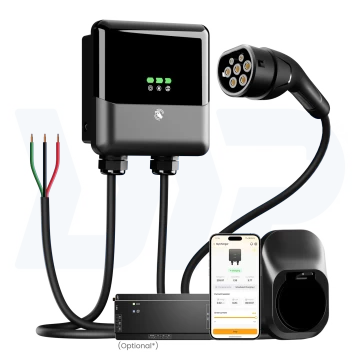
IEA Global EV Outlook 2024: Why 22 kW UER1 Type 2 Smart Chargers Suit European Homes

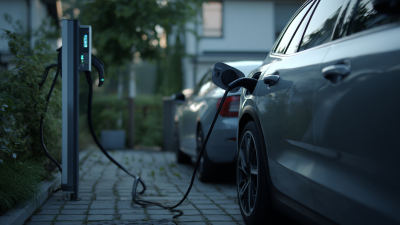
As electric-vehicle adoption grows across Europe, the IEA Global EV Outlook 2024 highlights the increasing importance of convenient charging at home. A 22 kW Type 2 smart charger can make daily charging more flexible for households with compatible three-phase supplies, while 7 kW and 11 kW configurations offer options for other home installations. Its Type 2 connector works with the major EV models commonly used on European roads, making it a practical choice for households with one or more electric vehicles.

Smart controls help owners fit charging around everyday routines. Through a mobile app, they can start or stop charging, set schedules, and monitor sessions. Optional home energy management can coordinate charging with household demand, support solar-powered charging, and help share available power. Built-in O-PEN protection and Type A residual-current protection with 6 mA DC detection add safeguards, while an IP66 enclosure and IK08 impact resistance help the unit withstand demanding outdoor conditions. CE certification supports its suitability for the European market.

FAQS

How should buyers compare EV charging station manufacturers?

Compare charging method, power output, testing, efficiency data, diagnostics, warranties, and local service. Appearance matters less. Real usage matters more.

When is AC charging a practical choice?

AC chargers suit offices, apartments, hotels, and fleet depots. Vehicles can remain parked for several hours. Typical output ranges from 7 to 22 kW.

When is DC fast charging more suitable?

DC charging fits highways, busy commercial sites, and short vehicle stops. Common output ranges from 30 to 180 kW. Some systems exceed 300 kW.

Does higher charging power always provide better value?

No. A powerful charger may remain underused while demand charges increase. Several moderate AC ports may serve a workplace better.

What infrastructure does a high-power DC charger require?

It may need stronger grid connections, thermal management, load balancing, and detailed maintenance planning. Cable length and cold weather can reduce actual performance.

Should a station support both CCS and NACS connectors?

Dual support can serve more vehicles and reduce driver confusion. However, dual cables may increase cabinet size, maintenance work, and installation costs.

What should buyers verify about OCPP 2.0.1 support?

Request a conformance statement, test results, supported profiles, and a live integration trial. Compatibility claims can be incomplete. Verify them directly.

How can RFID authentication be tested?

Test offline authorization, weak-network operation, session recovery, event logs, and firmware rollback. Clear records matter. Network failure should not erase a session.

Which physical details deserve inspection before purchase?

Check connector latches, cable weight, screen visibility, and repeated-session performance. A stiff cable or unreadable display can frustrate drivers quickly.

What information should manufacturers disclose before selection?

Request measured output, power curves, thermal limits, efficiency figures, warranty terms, replacement procedures, and local technical support. Peak output alone is insufficient.

Conclusion

The 2026 electric vehicle charging market is defined by rapid infrastructure growth, with more than five million public chargers reported worldwide in 2024. This guide explains how to evaluate ev charging station manufacturers by separating AC destination chargers from DC fast-charging systems and comparing power levels, installation requirements, and operating efficiency. It also emphasizes the importance of meeting the 97% uptime expectation applied to publicly funded charging projects, since dependable availability directly affects driver confidence and network performance.

The comparison examines support for both CCS and NACS connectors, along with OCPP 2.0.1 interoperability for flexible network management and future upgrades. Manufacturers are assessed according to global reach, product range, technical support, and deployment readiness. The final ranking considers total cost, warranty coverage, cybersecurity practices, maintenance capabilities, and scalability, helping fleet operators, businesses, and public agencies identify solutions that balance reliability, compatibility, and long-term value.
Sophie

Sophie

Sophie is a dedicated marketing professional at Fuzhou Yuǎn Jìn Chuan Néng Technology Co., Ltd., where her expertise in the company's innovative products sets her apart. With a strong understanding of the industry, she frequently contributes to the company's professional blog, crafting insightful......
Previous Top 10 Vehicle Charging Station Manufacturers Worldwide