Contact Us

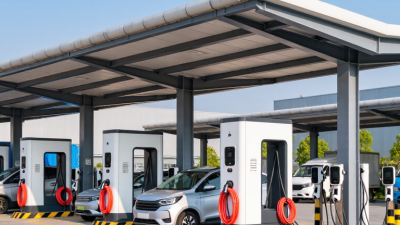
China has become a big manufacturing base for commercial charging infrastructure—no surprise there. Its suppliers work with logistics fleets, office parks, shopping centers, bus depots, and highway service areas. In this piece, we'll look at some of the leading companies behind the country's Commercial Electric Vehicle Charging Station market.
We'll run through Star Charge, TELD, Sinexcel, Injet New Energy, and Winline Technology. The idea is to compare their hardware, software platforms, charging power, safety controls, maintenance networks, and export experience. But honestly, a good supplier needs to offer more than just fast chargers. It should handle stable load management, clear payment systems, remote diagnostics, and practical installation guidance. A busy depot can't afford repeated overnight failures. And yes, small details matter: cable reach, screen visibility, connector storage, and rain protection.
Oleg Logvinov, a longtime CharIN charging expert, once put it simply: “Interoperability is essential for mass electric vehicle adoption.” That idea shapes this overview. A commercial electric vehicle charging station should communicate reliably with vehicles, energy systems, and management platforms. Chinese suppliers often bring strong manufacturing scale and competitive pricing. Still, price alone doesn't prove long-term value. Field service quality can vary from region to region. Export documentation may need a careful look, too. That's why this discussion stays deliberately cautious. Supplier claims need independent testing, site references, and transparent warranty terms. The strongest choice may not be the company with the highest charging speed. It might just be the partner that keeps a fleet moving on an ordinary, difficult Monday.

China’s commercial EV charging market is expanding with fleet electrification, urban logistics, and intercity transport. The International Energy Agency’s Global EV Outlook 2024 reported that China held more than half of the world’s public charging points in 2023, with roughly 2.7 million units installed. This scale creates demand for reliable Commercial Vehicle Charging Station infrastructure, not only passenger-car chargers.
The China Electric Vehicle Charging Infrastructure Promotion Alliance reported continued monthly growth in public charging facilities during 2024. Commercial sites increasingly require high-power direct-current equipment, load balancing, payment controls, and remote fault alerts. A depot serving electric buses may need several dispensers operating before dawn, when vehicles have limited turnaround time. Cable reach, parking geometry, and transformer capacity matter as much as charging speed.
Market estimates vary between reports. That is worth questioning. Some data count connectors, while others count complete stations. Buyers should verify uptime, output stability, protection ratings, and maintenance response before comparing supplier quotations. The IEA also notes that grid capacity and charging access remain important constraints in fast-growing EV markets. A technically impressive unit can still underperform if the local transformer cannot support simultaneous charging.
Choosing China’s commercial charging station suppliers requires more than comparing factory prices. The IEA’s Global EV Outlook 2024 reports over four million public charging points worldwide at the end of 2023. More than 2.3 million were added that year. This growth makes supplier reliability increasingly important. Ask for production records, certification files, and real operating data. A Commercial Electric Vehicle Charger should support relevant IEC standards, local grid requirements, and suitable connector formats. Confirm whether software supports OCPP 1.6J or 2.0.1. Certificates should match the exact model, not only the factory series.
Inspect thermal management, enclosure protection, cable durability, and emergency controls. For a 180 kW unit, review cooling performance during repeated summer sessions. Request twelve-month uptime logs from comparable sites. Also examine spare-parts availability, remote diagnostics, response times, and warranty exclusions. The U.S. Department of Energy’s Alternative Fuels Data Center highlights the importance of charger availability and station maintenance for dependable public charging. A low quotation can hide installation changes, software fees, or delayed replacement parts. That is an easy mistake. It deserves reflection.
Tips: Request a sample test report, not a sales promise. Audit one operating site through a video call. Test payment, load balancing, fault recovery, and data export. Ask who owns the charging data. Compare total cost over five years, including electricity hardware, maintenance, networking, and technician travel. Small details often decide whether a station earns revenue or waits beside an empty parking bay.
This growth is reshaping supplier categories.
Hardware specialists typically offer AC destination units, high-power DC chargers, liquid-cooled dispensers, and modular power cabinets. Depot-focused suppliers add pantograph systems, fleet energy controls, and overnight charging equipment.
Commercial Electric Vehicle Chargers now often include payment terminals, remote diagnostics, load balancing, and open communication protocols.
Software and service suppliers form another important category. Their platforms monitor connector status, schedule charging, manage tariffs, and produce maintenance alerts.
The National Renewable Energy Laboratory notes that charging reliability strongly affects driver confidence and fleet productivity. A site may have 20 connectors, yet one failed power module can create long queues. That detail is easy to miss.
Field experience also exposes weaker assumptions. Rated power may fall during heat, cable wear, or limited transformer capacity.
Suppliers should publish uptime methods, repair response times, warranty boundaries, and tested operating temperatures.
No portfolio is perfect. Buyers still need independent commissioning checks, because brochures rarely show the full site experience.
Commercial charging now demands more than high rated power. Fleet depots need predictable overnight charging, while highways require rapid turnover and dependable payment systems. Urban facilities face tighter space, noise, and grid constraints.
The International Energy Agency reported over 4 million public charging points worldwide at the end of 2023, with annual growth exceeding 40%. This expansion increases pressure on suppliers to deliver interoperable, serviceable equipment.
For fleets, intelligent load management can prevent several vehicles from charging at full power simultaneously. A depot may then reduce peak demand without delaying morning departures. Highway stations need liquid-cooled cables, weather protection, and clear stall layouts. Urban sites benefit from compact cabinets and dynamic pricing interfaces.
The IEA’s Global EV Outlook 2024 also identifies distribution-grid capacity as a growing challenge, especially where charging demand clusters quickly.
Reliability matters more than impressive laboratory output. Suppliers should provide measured uptime, remote diagnostics, spare-parts planning, and cybersecurity controls. Open communication protocols help operators integrate chargers with fleet software and energy systems.
However, a polished specification sheet can hide weak field support. That assumption deserves testing.
Buyers should request failure-rate records, repair-time data, and pilot results from comparable climates. The National Renewable Energy Laboratory has repeatedly shown that charging demand depends on travel patterns, dwell time, and local grid conditions, not charger power alone.
Commercial EV charging station suppliers must prove more than production capacity. Manufacturing quality begins with controlled welding, clean cable routing, and repeatable assembly procedures. Incoming components should be inspected, while every charger needs a recorded functional test before shipment. Serial tracking helps engineers identify defective batches quickly. Small details matter, especially in busy depots.
Safety standards should guide design from the earliest engineering stage. Reliable equipment includes insulation monitoring, overcurrent protection, emergency stops, and thermal sensors. Enclosures need suitable protection against dust, water, and accidental contact. Suppliers should provide test reports, installation guidance, and maintenance procedures based on recognized international requirements. Factory audits also reveal whether written policies match daily work.
Smart charging systems can reduce peak demand and protect local electrical capacity. Software should balance power across vehicles, using charging schedules, site limits, and battery conditions. Remote diagnostics can show rising temperatures or repeated connector faults before a breakdown occurs. Data security deserves equal attention. A convenient cloud platform is not automatically a secure one.
Field experience often exposes weaknesses that laboratory tests miss. A charger may perform well indoors, then struggle with winter moisture or summer heat. No factory is flawless. Suppliers should admit limitations, publish corrective actions, and improve designs after real operating feedback. That honesty is a stronger sign of reliability than polished sales language.
For fleet depots and retail sites, hardware alone is not enough. Commercial electric vehicle chargers wholesale should include site surveys, load calculations, civil works, and commissioning. Experienced installers check transformer capacity before delivery. They also map cable routes, drainage, lighting, and vehicle turning space. A charger can be powerful, yet useless if trucks cannot reverse safely.
The International Energy Agency’s Global EV Outlook 2024 reported more than four million public charging points worldwide in 2023. Public charging capacity also increased by over 40% that year. This growth raises pressure on network management. Suppliers should provide real-time status monitoring, remote diagnostics, payment controls, and charging-session records. Open communication protocols can reduce software lock-in, but compatibility is not always perfect. Test it on site.
After-sales support needs measurable procedures. Service agreements should define response times, spare-parts availability, firmware controls, and escalation contacts. The U.S. Department of Energy’s Alternative Fuels Data Center shows how charging location data supports planning and operational visibility. In practice, operators still need local technicians. A loose connector, damaged cable, or failed screen can stop a busy depot. Keep critical parts nearby. That costs more initially. It may prevent longer downtime later. Field teams should document every repair, review recurring faults, and admit when an installation design needs revision.
Selecting the Right Chinese Supplier for a Commercial EV Project
Choosing a Chinese supplier requires more than comparing charger prices. Project experience matters. Ask for completed installations with similar power levels, climates, and vehicle types. Request site photos, commissioning records, and customer references. A reliable supplier should explain failure rates, maintenance intervals, and expected service life clearly. Vague promises deserve caution.
Check the factory’s quality controls before signing a contract. Review production testing, insulation checks, thermal protection, and communication testing. Confirm compatibility with your energy management system and payment platform. Ask whether the chargers support remote diagnostics and secure software updates. Small details matter here. Delivery planning also needs attention. Confirm cabinet dimensions, cable lengths, packaging methods, and spare-part availability. One missing connector can delay an entire site.
Do not judge support by fast sales replies alone. Test the technical team with practical questions about peak loads, cold starts, and network failures. Request written response times and escalation procedures. A pilot installation can reveal cable heating, screen visibility, and unstable connections. It may also expose weaknesses in our original specifications. No supplier is perfect. I would rather discover that early, before installing fifty units. Review warranty exclusions carefully, especially for vandalism, extreme weather, and third-party electrical work. The strongest partner communicates limits honestly and improves after field feedback.
Commercial EV charger supplier-selection matrix based on commonly available technical and procurement specifications
| Selection Dimension | Common Commercial Requirement | Typical Available Specification | Recommended Verification Data | Project Relevance |
|---|---|---|---|---|
| Charger Type | Select the charging architecture according to dwell time, vehicle type, and site power availability. | AC charging: 7–22 kW. DC charging: approximately 30–480 kW per charging unit. | Product datasheet, rated output, installation diagram, and application references. | Determines charging speed, infrastructure cost, and vehicle turnover. |
| DC Output Power | Match output power with fleet schedules and the vehicle battery system. | Common commercial configurations include 60 kW, 120 kW, 180 kW, 240 kW, and higher-power systems. | Continuous power rating, peak power duration, power-sharing logic, and derating curve. | Important for bus depots, logistics fleets, highway sites, and public charging hubs. |
| Input Electrical System | The charger must be compatible with the local grid and site distribution equipment. | Three-phase AC input commonly uses 380–400 V at 50 Hz; regional variants may require 60 Hz or other voltage levels. | Input-voltage range, frequency range, maximum current, power factor, and harmonic-current data. | Prevents costly transformer, switchgear, and utility-connection changes. |
| Charging Connector | Connector selection must match the target vehicle population and destination market. | Common commercial options include CCS2, GB/T DC, and AC Type 2; other regional configurations may be available. | Connector standard, cable length, current rating, mechanical cycle rating, and regional compliance documents. | Directly affects vehicle compatibility and user access. |
| Communication Protocol | Ensure compatibility with the charging-management platform and remote-operation system. | OCPP 1.6J is widely deployed; OCPP 2.0.1 may be available for newer deployments. Ethernet, 4G, Wi-Fi, and optional wireless communication are common. | Protocol version, API documentation, cybersecurity controls, remote firmware update process, and integration test results. | Supports interoperability, monitoring, billing, and future platform migration. |
| Energy Efficiency | Higher efficiency reduces operating losses and improves lifecycle economics. | Commercial DC charging systems commonly target peak efficiency of approximately 95% or higher, depending on load conditions. | Efficiency curve at 25%, 50%, 75%, and 100% load; standby consumption; power-factor data. | Relevant to high-utilization sites and long-term electricity costs. |
| Environmental Protection | Outdoor installations require protection against water, dust, corrosion, and temperature variation. | Outdoor commercial units commonly use IP54, IP55, or IP65 protection levels; operating ranges often cover approximately −30°C to +50°C with derating. | Ingress-protection test report, operating-temperature range, humidity limits, corrosion protection, and altitude rating. | Essential for outdoor parking areas, fleet yards, coastal zones, and cold climates. |
| Safety Functions | The charger should include electrical, thermal, and user-protection functions. | Typical functions include overvoltage, undervoltage, overcurrent, short-circuit, overtemperature, leakage-current, emergency-stop, and surge protection. | Protection list, fault-response time, emergency-stop design, residual-current protection, and safety-test records. | Reduces operational risk and supports site safety approval. |
| Compliance Documentation | The supplier must provide documentation applicable to the destination market. | Common documentation may include CE, CB, IEC-based test reports, EMC records, safety reports, and local grid-compliance documents. | Certificate scope, issuing laboratory, product-model coverage, validity, and destination-country acceptance. | Avoids customs, permitting, insurance, and commissioning delays. |
| Load Management | Sites with limited grid capacity need coordinated power allocation. | Available functions may include dynamic load balancing, cabinet-level power sharing, scheduled charging, and peak-demand control. | Control logic, response time, minimum adjustable power, meter interface, and integration with energy-management systems. | Can reduce grid-upgrade requirements and demand charges. |
| Metering and Billing | Commercial operators need accurate energy records and transaction management. | Typical systems support MID-oriented metering options, RFID or app authorization, transaction records, and remote billing integration. | Meter accuracy class, calibration documents, transaction-data format, payment interface, and data-retention policy. | Important for public charging revenue, fleet cost allocation, and auditability. |
| Warranty and Service | Assess support capability over the expected operating life of the project. | Commercial warranties commonly range from 24 to 36 months; extended warranty and spare-parts programs may be available. | Warranty exclusions, response time, replacement policy, spare-parts lead time, remote diagnostics, and local service coverage. | Directly affects uptime, maintenance cost, and operational continuity. |
| Manufacturing and Quality Control | The supplier should demonstrate repeatable production and traceable testing. | Relevant controls include incoming-material inspection, automated testing, high-voltage testing, functional testing, burn-in testing, and serial-number traceability. | Factory-audit report, quality-management certification, inspection plan, failure-rate data, and final-test records. | Helps reduce early failures and inconsistent field performance. |
| Customization Capability | Large projects may require custom language, enclosure, cable, software, or electrical configurations. | Common options include custom labeling, cable length, connector combination, communication settings, enclosure color, payment interface, and software integration. | Minimum order quantity, engineering fee, sample approval process, tooling cost, and change-control procedure. | Useful for multi-site rollouts and operator-specific requirements. |
| Total Cost of Ownership | Compare the complete lifecycle cost rather than purchase price alone. | Include equipment, shipping, import duties, installation, civil works, software, electricity losses, maintenance, spare parts, and end-of-life costs. | Five- to ten-year cost model, annual maintenance estimate, efficiency assumptions, downtime cost, and replacement-part pricing. | Provides a more accurate basis for supplier selection and investment approval. |
Note: Technical ranges represent commonly offered commercial configurations and should be confirmed against the final product datasheet, applicable local regulations, and project-specific operating conditions.
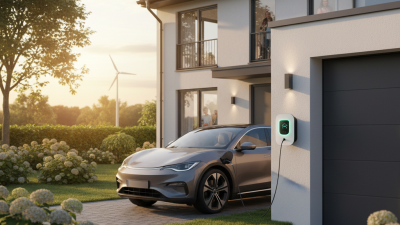
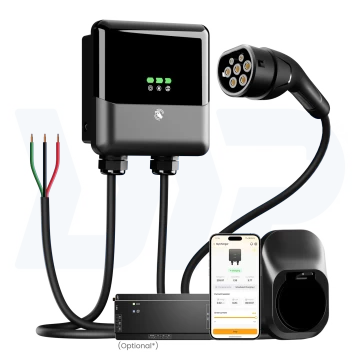
The IEA’s *Global EV Outlook 2024* reports that electric car sales exceeded 14 million worldwide in 2023, with Europe accounting for approximately 3.2 million vehicles. As EV adoption continues to expand, reliable residential charging is becoming an essential part of Europe’s energy infrastructure. The UER1 Type 2 smart AC charger is designed for European homes, supporting single-phase and three-phase installations with selectable 7kW, 11kW, or 22kW output. Its Type 2 connector is compatible with the vast majority of electric vehicles used across the European market, while the hardwired design supports a secure and practical installation.
The charger combines everyday convenience with advanced electrical protection. Built-in O-PEN protection and Type A RCD with 6mA DC detection help improve safety and support compliance with applicable installation requirements. Through a dedicated mobile application, users can schedule charging, control sessions remotely, and monitor energy use. An optional energy-management system can coordinate household loads, support solar-powered charging, and enable power sharing, helping households avoid unnecessary peak demand. With an IP66 enclosure, IK08 impact resistance, and CE certification, this 22kW solution is engineered for dependable use in varied residential environments as Europe prepares for continued EV growth.
Fleet electrification, urban delivery, and intercity transport are increasing charging demand. Public charging infrastructure already operates at very large scale. Commercial depots need dependable equipment, not just more connectors.
Common needs include high-power DC chargers, power dispensers, cables, payment controls, and remote alerts. A bus depot may operate several chargers before dawn. Cable reach and parking layout matter too.
Buyers should check uptime, output stability, protection ratings, and maintenance response. They should confirm whether a quotation counts connectors or complete stations. The numbers can mislead.
A fast charger cannot perform well when the local transformer lacks capacity. Several vehicles charging together may exceed the site limit. Load testing should happen before installation.
Buyers should examine welding, cable routing, assembly consistency, and component inspection. Each unit should receive a recorded functional test before shipment. Serial tracking helps identify faulty batches.
Useful features include insulation monitoring, overcurrent protection, emergency stops, and thermal sensors. Enclosures should resist dust, water, and accidental contact. Small protections prevent large problems.
Smart systems distribute power according to schedules, site limits, and battery conditions. They can reduce peak demand and protect local electrical capacity. Remote diagnostics may reveal heat or connector faults early.
Not completely. A charger may work indoors but struggle with winter moisture or summer heat. Suppliers should disclose limitations, publish corrective actions, and learn from actual depot feedback. That honesty is easy to miss.
China’s commercial EV charging market is expanding across logistics fleets, highway corridors, workplaces, retail centers, and urban parking facilities. A commercial electric vehicle charging station may include AC chargers for extended parking, DC fast chargers for rapid turnover, high-power systems for buses and trucks, energy management equipment, payment platforms, and remote monitoring tools. When evaluating Chinese suppliers, project owners should consider charging capacity, equipment compatibility, production consistency, certifications, safety protection, software functionality, and the supplier’s experience with similar operating environments.
A reliable supplier should provide more than hardware. Strong partners can support site assessment, electrical design, installation, commissioning, network integration, maintenance, spare parts, and responsive after-sales service. Smart charging features, load balancing, data reporting, user management, and scalable platform architecture can improve efficiency and reduce operating costs. The best choice depends on vehicle types, traffic volume, site conditions, local requirements, budget, and future expansion plans. A structured comparison of product portfolios, quality controls, service capabilities, and total ownership costs can help ensure a safe, efficient, and adaptable commercial charging project.