Choosing a home car charger supplier in China isn't just about grabbing the cheapest option. You really need to dig a bit deeper—look into safety tests, how well it charges, the features of its software, warranty details, and the manufacturer's experience. This guide isn’t about ranking companies based on fluff; it’s about sharing insights on ten notable Chinese suppliers of residential EV charging gear. We focus on real, practical info—things that matter in everyday use.
We've taken a look at companies like BYD, Star Charge, TELD, Autel Energy, Sinexcel, Teison, BENY, SETEC Power, Joint, and Injet New Energy. For each, we evaluate their product ranges, how easy they are to install in different spaces, the options they offer for power output, certifications, customer support, and their experience with exports. Some of these guys are all about small, wall-mounted chargers. Others offer smarter systems with load management, or even commercial-grade setups that work perfectly at home.
The thing is, a dependable home charger should perform reliably in everyday conditions—you know, a garage with limited space, a freezing winter morning, or when your household electricity isn’t 100% stable. Sometimes, these real-life scenarios tell you more than a fancy brochure. Sure, price is important, but poor customer service or support can cost you a lot down the line. Honestly, there’s no such thing as a perfect ranking—what works well for one person or market might not for another, depending on your vehicle brand, how many units you’re buying, and local electrical codes.
Before you decide, make sure to double-check current certifications, warranty details, whether their app works well, and after-sales support. Sometimes, the info on their websites doesn’t tell the full story. Getting things tested independently and talking directly with suppliers goes a long way. This overview aims to give you a fair starting point, especially if you're an importer, distributor, installer, or just an EV owner looking around. Oh, and here’s a little honest truth—usually, the cheapest charger isn’t the safest choice in the long run. So, take your time with each recommendation and really check what they offer.
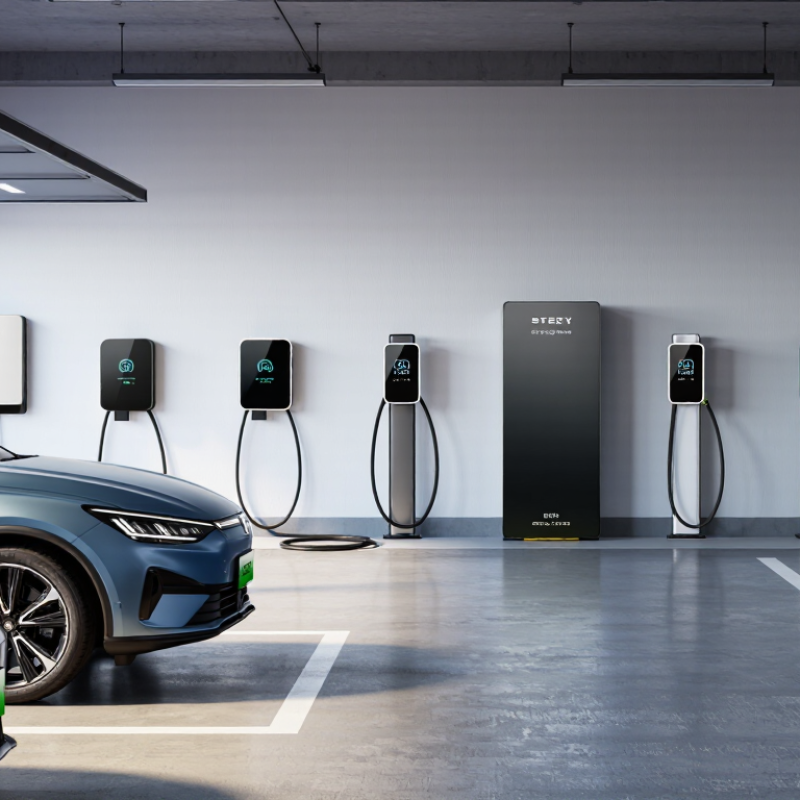
Defining Home EV Chargers: AC Levels, Power Ratings, and Use Cases
For an Electric Car Charger For Home, the first question is not brand selection. It is charging level, electrical capacity, and daily driving distance. Level 1 usually uses a standard 120-volt outlet and delivers about 1.4–1.9 kW, according to the U.S. Department of Energy’s Alternative Fuels Data Center. It may add roughly 3–5 miles of range per hour. That suits low-mileage drivers with overnight parking.
Level 2 equipment uses a 208- or 240-volt circuit. The same DOE source lists typical output from 3.3 to 19.2 kW. In real homes, 7.2–11.5 kW is more common because installation limits matter. A 7.2 kW charger can add approximately 25–35 miles during eight hours, depending on vehicle efficiency. More power is not automatically better. The panel may need an upgrade, and peak household loads can complicate installation.
The International Energy Agency’s Global EV Outlook 2024 confirms that private charging remains a major part of electric-vehicle use, especially where drivers have dedicated parking. Yet reports often simplify household behavior. A charger rated at 11 kW may deliver less when the car reaches its battery limit, or when energy management reduces output. Small details matter: cable length, outdoor temperature, connector protection, and scheduled charging. I have seen power ratings look impressive on paper. The real test is a quiet night, a cold battery, and a morning departure.
China’s EV Charging Scale: 2024 EVCIPA Data and IEA Market Context
China Top 10 Home Car Charger Suppliers?
China’s electric vehicle charging market expanded sharply in 2024. EVCIPA data recorded about 12.8 million charging facilities nationwide by year-end. Private chargers represented roughly 9.2 million units, while public chargers reached about 3.6 million. These figures show strong household demand, not only rapid highway construction.
The IEA offers useful market context. China sold more than 11 million electric cars in 2024, accounting for most global electric car sales. A growing vehicle fleet creates steady demand for safe residential charging. For buyers comparing a Home Charger Electric Car solution, practical details matter. A garage unit may need adjustable current, ground-fault protection, weather resistance, and clear installation guidance. A neat cable hook can also prevent daily trips and damage.
Supplier comparisons should examine testing records, warranty handling, software reliability, and compatibility with local electrical systems. EVCIPA’s scale data is convincing, but scale alone does not prove product quality. That is an important weakness in many market lists. Some published rankings also mix manufacturers, assemblers, and trading companies. The distinction deserves closer checking. Installation access remains uneven in older apartment compounds, especially where parking spaces are shared. A compact charger helps, yet it cannot solve every wiring or management problem. Reliable suppliers should explain these limits openly, provide measurable specifications, and support after-sales service beyond the initial sale.
China’s EV Charging Scale: 2024 EVCIPA Data and IEA Market Context
China had approximately 12.818 million charging facilities by the end of 2024, including public and private installations.
Public charging infrastructure reached about 3.579 million units, consisting of 2.306 million AC chargers and 1.273 million DC chargers. Private chargers accounted for approximately 9.239 million units. EVCIPA data is shown for China at year-end 2024; the IEA reported that global public charging points exceeded 5 million in 2024, highlighting China’s leading role in charging-network expansion.
Sources: China Electric Vehicle Charging Infrastructure Promotion Alliance (EVCIPA), year-end 2024 statistics; International Energy Agency (IEA), Global EV Outlook market context.
Ranking Criteria: Capacity, Safety, Certification, Pricing, and Support
China’s top 10 home car charger suppliers should be ranked by evidence, not catalogue size. The IEA’s Global EV Outlook 2024 recorded more than eight million electric car sales in China during 2023. That scale increases demand for dependable residential charging. Capacity matters, but a 7 kW unit may suit overnight charging better than an expensive 22 kW model. Installation limits matter too.
Safety deserves heavier weighting. A reliable Ev Car Charger For Home should include residual-current protection, temperature monitoring, overload control, and stable cable connections. Certification should match the destination market. Buyers should verify CCC, CE, UKCA, or equivalent approvals, plus compliance with IEC 61851 and IEC 62196 where applicable. A certificate alone is not enough. Test scope and validity must be checked.
Pricing should include software, installation guidance, spare parts, and warranty coverage. The IEA reports that home charging usually remains the most convenient and economical option for private electric-car users. However, low purchase prices can conceal weak after-sales support. Supplier rankings should examine response times, firmware updates, replacement procedures, and documented uptime. Support quality is difficult to measure. That is an imperfect part of the ranking. Still, a supplier offering clear manuals, local troubleshooting, and traceable production data deserves more trust than one making broad safety claims. Capacity, safety, certification, pricing, and support should be scored together, with safety and compliance carrying the greatest weight.
China’s Top 10 Home Car Charger Suppliers: Profiles and Key Products
China’s top ten home car charger suppliers show different strengths rather than one perfect model. Several focus on compact AC wallboxes for apartments and private garages. Others produce portable chargers with adjustable current settings and reinforced cables. Some specialize in smart chargers using app control, scheduled charging, load balancing, and common communication protocols. A few offer solar-ready units, dual-plug systems, or customized housings for distributors. Their key products usually range from 3.6 kW portable chargers to 7 kW and 22 kW wall-mounted units. Profiles should include factory capacity, testing equipment, warranty procedures, and experience with overseas electrical standards.
Reliable evaluation requires more than viewing a polished product page. Request sample units, inspection records, protection test results, and clear installation instructions. Check residual-current protection, thermal monitoring, weather resistance, cable flexibility, and standby energy use. Supplier response time also matters. A technically strong charger can still create trouble when spare parts arrive slowly. No supplier is perfect. Even an experienced manufacturer may have weak software support or inconsistent packaging. That detail deserves honest attention.
Tips: Ask for a sample before placing a large order. Test charging under low voltage and high temperature. Confirm connector compatibility, communication functions, warranty coverage, and replacement-part availability. Compare the delivered unit, not only the quotation. A lower price may hide thinner cables, limited testing, or unclear after-sales responsibility.
Comparing Output, Connectivity, Warranty, and Total Ownership Costs
China Top 10 Home Car Charger Suppliers: Comparing Output, Connectivity, Warranty, and Total Ownership Costs
When comparing China’s top ten home charger suppliers, output should match the vehicle, not the marketing label. The IEA’s Global EV Outlook 2024 reports more than four million public charging points worldwide at the end of 2023. Yet home charging remains practical for drivers with private parking. Most residential units deliver 7 to 11 kW through single-phase or three-phase power. A 7 kW charger can add roughly 35 to 50 kilometres of range per hour, depending on vehicle efficiency. Faster output is useful, but only when household wiring supports it.
Connectivity deserves closer inspection. Wi-Fi, Bluetooth, and mobile applications can show energy use, schedule charging, and send fault alerts. However, a polished app does not guarantee stable service. The Open Charge Point Protocol supports broader interoperability, while ISO 15118 can enable advanced vehicle-to-charger communication. Buyers should ask about firmware updates, data control, offline operation, and response times. Sometimes, simple is safer.
Warranty terms can change total ownership costs sharply. Compare coverage for the cable, connector, control board, installation accessories, and labour. A three-year warranty may exclude weather damage or improper installation. The U.S. Department of Energy’s Alternative Fuels Data Center identifies installation and electricity as major charging-cost variables. Therefore, calculate purchase price, electrician fees, standby consumption, software subscriptions, and possible replacement parts. A cheaper charger may lose that advantage after repeated repairs. My own comparison would also record failed connections during winter and peak evening hours. That evidence is imperfect, but brochures rarely show the inconvenient details.
China Top 10 Home Car Charger Suppliers? - Comparing Output, Connectivity, Warranty, and Total Ownership Costs
| Rank |
Anonymized Supplier Profile |
Typical AC Output |
Input / Phase |
Connector Options |
Connectivity |
Core Safety Features |
Typical Warranty |
Indicative Unit Price |
Estimated Installed Cost |
Five-Year TCO* |
Best-Fit Use Case |
| 1 |
Supplier Profile 01 |
7.4 kW |
220–240 V, single-phase, 32 A |
Type 2; tethered or socketed |
Wi-Fi + Bluetooth + 4G optional |
30 mA AC residual-current protection; 6 mA DC detection; over-temperature protection |
3 years |
US$320–520 |
US$650–1,150 |
US$950–1,750 |
Connected single-home charging with load scheduling |
| 2 |
Supplier Profile 02 |
11 kW |
380–415 V, three-phase, 16 A |
Type 2 socketed |
Wi-Fi + Ethernet |
Residual-current monitoring; surge protection; IP55 enclosure |
3 years |
US$420–680 |
US$850–1,500 |
US$1,250–2,200 |
Homes with three-phase electrical service |
| 3 |
Supplier Profile 03 |
7.4 kW |
220–240 V, single-phase, 32 A |
Type 2 tethered |
Bluetooth + RFID; app optional |
Leakage detection; earth-fault monitoring; automatic restart |
2 years |
US$240–420 |
US$560–1,000 |
US$820–1,520 |
Cost-sensitive residential installations |
| 4 |
Supplier Profile 04 |
22 kW |
380–415 V, three-phase, 32 A |
Type 2 socketed |
Wi-Fi + 4G + OCPP 1.6J |
Integrated DC leakage detection; surge protection; IP65 enclosure |
3 years |
US$650–1,050 |
US$1,150–2,100 |
US$1,750–3,100 |
Large homes and small residential fleets |
| 5 |
Supplier Profile 05 |
7.4 kW |
220–240 V, single-phase, 32 A |
Type 2; interchangeable cable |
Wi-Fi + OCPP 1.6J |
Dynamic load balancing; over-voltage and over-current protection |
3 years |
US$360–590 |
US$720–1,300 |
US$1,050–1,950 |
Smart-energy management and solar integration |
| 6 |
Supplier Profile 06 |
11 kW |
380–415 V, three-phase, 16 A |
Type 2 tethered |
Wi-Fi + Bluetooth |
Residual-current detection; temperature monitoring; IP54 enclosure |
2 years |
US$330–560 |
US$760–1,350 |
US$1,050–1,900 |
Standard three-phase home charging |
| 7 |
Supplier Profile 07 |
7.4 kW |
220–240 V, single-phase, 32 A |
Type 2 socketed |
4G + RFID; no fixed Wi-Fi |
RCD protection; surge protection; emergency stop function |
3 years |
US$390–640 |
US$780–1,450 |
US$1,150–2,050 |
Remote access where home Wi-Fi is unreliable |
| 8 |
Supplier Profile 08 |
3.7–7.4 kW |
220–240 V, single-phase, 16–32 A |
Type 2 tethered |
Bluetooth; optional Wi-Fi |
Adjustable current limit; thermal protection; earth-fault monitoring |
2 years |
US$210–380 |
US$500–950 |
US$730–1,400 |
Older homes with limited electrical capacity |
| 9 |
Supplier Profile 09 |
11–22 kW |
380–415 V, three-phase, 16–32 A |
Type 2 socketed |
Wi-Fi + Ethernet + OCPP 1.6J |
Load management; DC leakage detection; surge and over-temperature protection |
3 years |
US$580–980 |
US$1,050–1,950 |
US$1,650–2,900 |
Multi-EV households requiring scalable charging |
| 10 |
Supplier Profile 10 |
7.4 kW |
220–240 V, single-phase, 32 A |
Type 2; tethered or socketed |
Wi-Fi + app; RFID optional |
AC residual-current protection; 6 mA DC detection; IP65 enclosure |
5 years |
US$450–720 |
US$850–1,500 |
US$1,150–2,050 |
Buyers prioritizing longer warranty coverage |
*Five-year TCO includes the charger, standard installation, commissioning, and routine maintenance allowance. It excludes electricity, vehicle costs, major electrical-panel upgrades, taxes, and regional incentives. Prices are indicative market ranges and should be verified against the final quotation, certification package, installation conditions, and local grid requirements.
Comparison basis: Output values refer to maximum AC charging power. Actual charging speed is limited by the vehicle's onboard charger, available grid capacity, cable rating, and local electrical regulations. Supplier identities are intentionally anonymized; the profiles are organized by commonly documented residential charger specifications rather than by disclosed company or brand information.
Compliance Checklist: GB Standards, CQC, CE, and IEC 61851 Requirements
When comparing China’s top home car charger suppliers, compliance should come before price or charging speed. Ask for the exact GB standards used for mainland sales, including applicable GB/T requirements for conductive charging equipment, connectors, safety, and communication. The test report must match the proposed model, rated current, cable length, and enclosure design. A report for a similar product is not enough.
Check whether CQC certification applies to the charger and its installation conditions. CQC documents should show the certificate holder, factory location, model number, and validity status. For export markets, request CE technical documentation, not only a CE mark on the label. Review EMC, electrical safety, and RoHS evidence where relevant. IEC 61851 should be checked for control-pilot functions, charging modes, protective behavior, and communication between the vehicle and charger.
A practical audit includes a sample inspection, insulation testing, earth continuity checks, and simulated over-temperature operation. Ask how residual-current protection is handled, especially during DC fault conditions. Installation instructions should specify cable size, breaker rating, grounding method, and IP protection limits. I would also verify firmware revision and production traceability.
Paperwork can look complete.
One weakness deserves attention: certificates may remain valid while internal components change. Require change-control records and a fresh sample before placing a large order. Supplier experience matters, but documented evidence matters more. A factory visit can reveal loose terminals, unclear labels, or inconsistent assembly that a polished certificate will never show.
Selecting a Supplier by Vehicle Compatibility, Installation, and After-Sales Data
China’s top ten home car charger suppliers should be compared through evidence, not attractive product pages. Start with vehicle compatibility. Check connector standards, charging capacity, software communication, and protection features. An At Home Electric Car Charger must match the vehicle’s onboard charging limits. A higher-rated unit will not automatically charge faster.
Installation details often reveal a supplier’s practical experience. Ask for cable length, mounting dimensions, enclosure ratings, and circuit requirements. Request clear wiring diagrams and electrician guidance. A reliable supplier should explain grounding, load management, and outdoor installation conditions. Visit the installation site when possible. A driveway wall and a detached garage rarely need the same plan. Small details matter.
After-sales data deserves equal attention. Request warranty terms, fault-response times, spare-part availability, and service records from recent projects. Ask how many units were installed, not only how many were shipped. Track failure rates by model and installation environment. Suppliers should provide test reports and traceable quality records. My own checklist once focused too heavily on charging speed. That was a mistake. A charger that is powerful on paper may become frustrating when support is slow. Leave room for uncertainty, and verify claims with customer references, sample inspections, and written service commitments.
How to Choose and Install the UN1 80 Amp EV Charger with OCPP for Smarter Home Charging
Choosing an 80-amp EV charger starts with confirming that your home or commercial electrical system can support up to 19.2 kW of continuous charging power. Have a qualified electrician evaluate the service capacity, panel space, wiring, grounding, overcurrent protection, and local permitting requirements before installation. Select the SAE J1772 plug for broad compatibility, or choose the optional NACS connector if it matches your vehicle fleet. Consider cable length, mounting position, weather exposure, parking patterns, and ventilation so the charger remains convenient and protected during daily use.
For smarter charging, select a model that supports OCPP 1.6J, OCPP 2.0.1, and ISO 15118, allowing connection with compatible management platforms, remote monitoring, usage tracking, and future-ready energy features. Multiple communication options can help maintain stable data transfer through the most suitable network setup. During installation, mount the unit securely, route wiring according to approved methods, configure network access, and verify charging performance with the selected vehicle. A custom segment-style display can provide clear information about charging status, current output, and session progress, while scheduled charging and load management can help reduce peak-demand pressure.
FAQS
Level 1 usually uses a 120-volt outlet and delivers about 1.4–1.9 kW. It may add 3–5 miles of range per hour. Level 2 uses a 208- or 240-volt circuit. It commonly delivers 7–11.5 kW in homes. More power is not always better.
Level 1 may suit drivers who travel short distances daily. Overnight parking can provide enough recovery for the next morning. A 10-mile commute may need only several charging hours. Check your actual driving pattern first.
Not always. A high-power unit may require a larger circuit or panel upgrade. Peak loads can include heating, cooking, laundry, and water heating. An electrician should check capacity before installation. The charger rating alone is not enough.
A 7 kW charger may add about 25–35 miles during eight hours. Some vehicles may gain roughly 35–50 kilometres per hour. Results depend on battery efficiency, temperature, and charging limits. The vehicle may reduce power near full charge. Numbers on paper can mislead.
Wi-Fi or Bluetooth can show energy use and charging progress. Mobile controls may schedule charging during quieter hours. Fault alerts can help identify interruptions quickly. Ask whether charging works without internet access. Simple systems are sometimes safer.
Check coverage for the cable, connector, control board, and accessories. Confirm whether labour and weather-related damage are included. Also review exclusions for incorrect installation. A three-year warranty may cover less than expected. Read the small conditions.
Request test reports matching the exact model, cable length, and enclosure. For mainland sales, review applicable GB and GB/T requirements. Check CQC documents when relevant to the product and installation. For export use, request complete CE technical documentation. A label is not proof.
Review IEC 61851 functions, protective behavior, and vehicle communication. Inspect insulation, earth continuity, temperature protection, and residual-current handling. Installation instructions should specify cable size, breaker rating, grounding, and IP limits. Verify firmware versions and production traceability. Paperwork can look complete. Internal parts may still change.
Conclusion
This guide explains how to evaluate China’s home EV charging market and identify reliable Home Car Charger suppliers. It introduces AC charging levels, power ratings, installation scenarios, and the differences between basic household charging and higher-output residential systems. It also places China’s rapidly expanding EV charging infrastructure in the context of recent industry data and global market development, while presenting practical criteria for comparing suppliers, including production capacity, safety design, certifications, pricing, connectivity, warranty coverage, and customer support.
The guide further outlines key compliance considerations, such as applicable GB standards, CQC certification, CE marking, and IEC 61851 requirements. It compares total ownership costs rather than focusing only on purchase price, covering installation, energy management, maintenance, and potential upgrades. Finally, it provides a structured approach for selecting a supplier according to vehicle compatibility, electrical capacity, installation conditions, software features, after-sales service, and documented quality performance.
 Contact Us