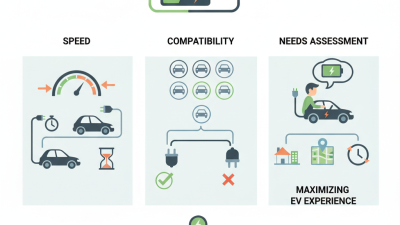
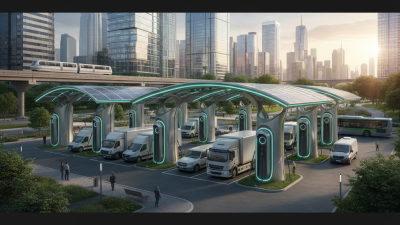
Choosing the right Ev Charging Solution is no longer a simple hardware decision. It affects daily travel, electricity costs, site capacity, and customer confidence. The International Energy Agency’s Global EV Outlook 2024 reported nearly 14 million electric car sales in 2023, representing about 18% of global car sales. That growth creates pressure for reliable charging, not merely more charging points.
Fatih Birol, Executive Director of the International Energy Agency, said, “The growth of electric cars is unstoppable.” His statement highlights the market direction, but it does not answer every practical question. A useful ev charging solution must match vehicle patterns, parking time, electrical capacity, and operating budgets. A homeowner may need an 11 kW AC charger beside a garage. A retail site may require payment access, load balancing, and dependable uptime. A fleet depot needs careful scheduling, backup planning, and stronger DC capacity.
Real experience matters here. A charger that looks powerful on paper may perform poorly during peak demand. A cheaper installation may create expensive grid upgrades later. No option is perfect. That is the uncomfortable truth. This guide compares charging speed, connector compatibility, software, installation demands, maintenance, and long-term value. It also considers evidence from IEA research, National Renewable Energy Laboratory studies, and real operating conditions. The goal is practical judgment, not exaggerated promises.
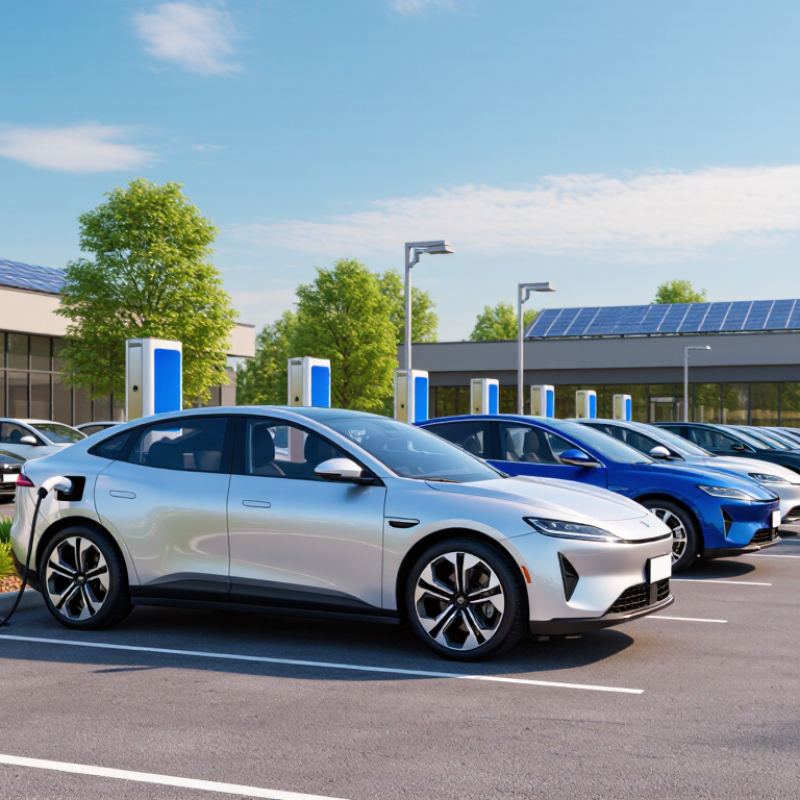
Define Your EV Charging Needs and Driving Habits
Choosing an EV charger starts with your routine, not the charger’s maximum speed. Track your weekly mileage, parking hours, and overnight access for seven days. A 30-mile commute needs a different setup from frequent 200-mile trips.
The International Energy Agency reported more than 4 million public charging points worldwide at the end of 2023. Yet public access does not remove the value of predictable home charging. If your car sits from 7 p.m. to 7 a.m., a slower charger may replenish enough energy overnight. That can reduce installation costs and avoid unnecessary electrical upgrades. Check the vehicle’s onboard charging limit, too. A powerful unit cannot exceed it.
Apartment residents need extra questions answered. Can the parking space reach a suitable electrical circuit? Who pays for installation, electricity, maintenance, and future repairs? An effective Apartment Ev Charging Solution should record energy by user and support fair billing. Shared spaces also need clear rules when several drivers return after work. The U.S. Department of Energy notes that charging demand depends heavily on travel patterns, site access, and dwell time. Measure those conditions before choosing hardware. Small details matter, such as a cable reaching the port without crossing a walkway. I once underestimated winter charging losses; that mistake changed the required overnight margin. Your habits may change, so leave room for growth.
Compare Home, Workplace, and Public Charging Options
How to Choose the Best EV Charging Solution?
Home charging offers convenience and predictable costs. An overnight connection can restore most daily driving range. However, installation may require panel upgrades, permits, and a qualified electrical inspection. Check cable length, weather protection, and available parking space before choosing equipment. Home charging suits drivers with regular parking and stable electricity access.
Workplace charging supports employees who park for several hours. It can reduce dependence on rapid public stations during busy evenings. Employers should assess parking turnover, electrical capacity, user access, and maintenance responsibilities. Shared chargers need clear time limits. Otherwise, one vehicle may occupy a space all day.
Public charging remains essential for apartment residents, long trips, and unexpected travel. Compare connector compatibility, charging speed, payment methods, lighting, and station reliability. Fast charging saves time, but frequent use may cost more and increase battery heat. Conditions matter.
Tips: Match the charger to your weekly mileage, not your car’s maximum speed. Ask an electrician to review the circuit. Keep a backup public-charging plan. Check prices at different times. Read recent user reports, but treat them carefully. A single bad review may reflect a temporary fault. No option is perfect. Your routine may change, too. Reassess after a few weeks of real use, especially during cold weather or holiday travel.
Choose the Right Charging Speed and Power Level
Choosing EV charging power begins with vehicle duty, not the charger’s headline number. A commuter car parked overnight may need only 7–11 kW AC. A delivery van returning at 6 p.m. needs a different calculation. Measure daily mileage, battery size, arrival time, and departure deadline. Include winter losses and charging inefficiency. The arithmetic is less glamorous, but it prevents expensive oversizing.
The U.S. Department of Energy’s Alternative Fuels Data Center places common Level 2 charging around 3–19.2 kW. DC fast charging generally starts near 50 kW and can exceed 350 kW. The IEA’s Global EV Outlook 2024 reports more than four million public charging points worldwide by the end of 2023. Yet rapid infrastructure growth does not mean every site needs ultra-fast hardware. A 150-kW charger may shorten one vehicle’s stop, but battery limits and charging curves reduce its actual output.
For an Ev Fleet Charging Solution, calculate simultaneous demand carefully. If ten vans each request 11 kW, the theoretical peak reaches 110 kW before building loads. Smart load balancing can reduce that peak, especially when vehicles remain parked for several hours. A rainy Monday can disrupt neat assumptions. Average usage is not enough. Check the transformer, cable distance, parking rotation, and tariff structure before selecting power. A smaller AC network may work better than fewer high-power units, although that judgment should be tested against real arrival data.
How to Choose the Best EV Charging Solution?
Choose the Right Charging Speed and Power Level
The chart compares representative nominal power levels for common EV charging options.
AC Level 1 is suitable for overnight home charging, while AC Level 2 is generally better
for daily charging. DC fast charging is designed for shorter stops and longer trips.
Actual charging speed depends on the vehicle, battery state of charge, temperature,
electrical installation, and charging power tapering.
Typical nominal power values shown: AC Level 1: 1.4 kW, AC Level 2: 7.2 kW, DC Fast: 50 kW,
DC High Power: 150 kW, and DC Ultra-High Power: 350 kW.
Check Vehicle, Electrical, and Connector Compatibility
How to Choose the Best EV Charging Solution?
Check Vehicle, Electrical, and Connector Compatibility
Choosing an EV charging solution starts with the vehicle, not the charger’s advertised speed. Check the vehicle’s maximum AC charging rate and battery system voltage. A powerful unit cannot make a car charge faster than its onboard charger allows. Review the owner’s manual carefully. Small details matter.
Next, inspect the electrical supply at the installation site. Confirm the service voltage, available amperage, circuit capacity, and breaker rating with a qualified electrician. A home with an older panel may need an upgrade. The calculation should include existing appliances, such as ovens, heat pumps, and water heaters. Never rely on a quick visual check. It can be misleading. Ev Charging Solution Providers should offer load assessment details before recommending equipment.
Connector compatibility also deserves close attention. Match the charging connector to the vehicle inlet and local charging standards. For public or shared locations, consider whether users need AC charging, DC fast charging, or both.
Cable length, locking design, weather resistance, and parking orientation affect daily convenience. A cable that barely reaches the inlet becomes frustrating in rain. I once underestimated this practical issue. It was a poor assumption.
Ask about protective controls, temperature monitoring, installation certification, and future vehicle compatibility. Requirements can change, and today’s convenient setup may feel limited later.
Evaluate Installation Requirements and Safety Standards
Choosing a Smart Home Charging Solution begins with the electrical system, not the charger’s screen or cable length. The International Energy Agency’s Global EV Outlook 2024 reports nearly 14 million electric cars sold worldwide in 2023. Public charging points also exceeded four million. Home installations therefore need careful planning, especially in older buildings.
Ask a qualified electrician to check the main panel, available capacity, cable route, earthing, and protection devices. A dedicated circuit is usually safer than sharing power with a garage freezer. In many regions, residual-current protection, overcurrent protection, and weather-resistant enclosures are required. IEC 61851 and IEC 60364-7-722 provide useful international guidance, while NEC Article 625 governs many North American installations. Local rules still control the final decision.
Installation details matter. Keep cables away from vehicle wheels and standing water. Leave ventilation around equipment, even when the unit feels cool. A tidy wall does not guarantee safe wiring. An overloaded panel may remain silent for months. I would also confirm utility approval before installation, because some homes cannot support high continuous loads without upgrades. The U.S. Department of Energy notes that Level 2 charging commonly operates around 240 volts, making professional assessment essential. Some assumptions fail here. A lower-power circuit may be safer and sufficient for overnight charging than an expensive upgrade. Inspect the connection after installation, and review warning signs such as heat, discoloration, or repeated breaker trips.
Compare Costs, Smart Features, and Long-Term Value
Choosing an EV charging solution starts with total cost, not the purchase price.
A basic home charger may seem affordable, but installation can change the final bill. Ask a qualified electrician to inspect your panel, cable route, and available amperage. A short garage connection usually costs less than a buried outdoor cable. Electricity rates matter too. Charging after midnight may reduce running costs where time-based tariffs apply. However, not every household has access to those savings.
Smart features can improve convenience and long-term value.
Look for scheduled charging, load balancing, energy reports, and remote fault alerts. Load balancing is especially useful when an oven, heat pump, and charger operate together. Weak Wi-Fi can make remote controls unreliable, so test the signal near the parking space. Weather protection, warranty length, software support, and replacement parts deserve equal attention. I once underestimated maintenance access; a neat installation became awkward to service. That mistake is easy to repeat.
Tips:
Request itemized installation quotes. Compare electricity costs over five years, not five months. Keep receipts. Check whether the charger can serve a future vehicle with different charging needs. Avoid paying extra for features you will never use. A simple, repairable system may deliver more value than an impressive dashboard. Think carefully.
China Suppliers’ Guide to DEF 240 Dual-Gun DC Fast Chargers: 80–240kW Factory Solutions
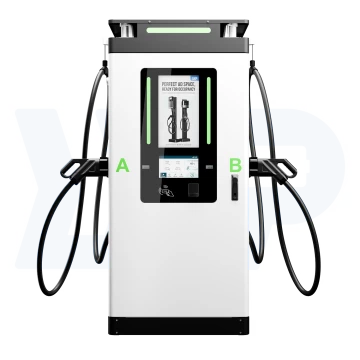
The International Energy Agency’s *Global EV Outlook 2024* reported that global electric-car sales approached 14 million in 2023, with demand expected to remain strong. This growth is increasing the need for dependable high-power infrastructure. For fleet operators, highway service areas, and commercial properties, the DEF240 dual-gun DC fast charger offers a scalable China-manufactured solution with configurable outputs of 80, 120, 160, 200, or 240 kW.
Designed for efficient simultaneous charging, the DEF240 uses two CCS2 connectors and intelligent load management to distribute available power according to vehicle demand. Its high-precision MID meter supports accurate energy measurement, while 5-meter cables with retractors make heavy charging leads easier to handle. TUV certification, IP54 protection, and multiple electrical safeguards enhance operational reliability across varied outdoor conditions. These features allow suppliers to match charger capacity with site power availability and traffic volume without changing the core platform.
Connectivity is supported through Ethernet, Wi-Fi, and 4G, enabling continuous communication with charging-management platforms and back-office systems. An optional 18.5-inch advertising display can add media-based revenue alongside charging services. As the International Council on Clean Transportation has highlighted the importance of convenient, high-power charging for expanding electric mobility, flexible 80–240 kW equipment can help Chinese suppliers serve commercial, fleet, and public charging projects with a consistent, upgrade-ready configuration.
FAQS
Track mileage, parking time, and overnight access for seven days. A 30-mile commute needs less capacity than frequent 200-mile trips. Measure real habits.
No. Check your vehicle’s onboard charging limit first. A powerful charger cannot exceed that limit. Overnight charging may already meet your needs.
Yes, if the vehicle sits for several hours. For example, parking from 7 p.m. to 7 a.m. may provide enough time. This can reduce installation costs.
Confirm circuit access, parking permission, payment responsibility, maintenance, and repair arrangements. Shared spaces need clear usage rules. People return at different times.
Use energy records for each user when possible. Set clear billing rules before installation. Do not rely on memory or informal promises.
Ask for a panel, cable route, earthing, and protection-device inspection. The electrician should check available capacity and continuous load. A dedicated circuit is usually safer.
Keep cables away from wheels, walkways, and standing water. Leave ventilation around the equipment. Watch for heat, discoloration, or repeated breaker trips.
Maybe, but do not assume it can. Older panels may need upgrades or a lower-power setup. A quiet panel can still be overloaded.
Do not choose hardware before measuring your routine and electrical limits. I once underestimated winter charging losses. Leave extra overnight capacity for colder days and future driving changes.
Conclusion
Choosing the best ev charging solution starts with understanding your daily driving habits, vehicle range, and typical parking locations. Consider whether home, workplace, or public charging will meet your needs, and determine the charging speed and power level that fit your schedule without exceeding your vehicle’s capabilities. A careful review of connector types, vehicle requirements, and your property’s electrical capacity will help ensure reliable performance.
Before installation, evaluate wiring, ventilation, grounding, weather protection, and applicable safety standards with a qualified professional. It is also important to compare purchase, installation, energy, and maintenance costs over time. Smart features such as scheduling, usage monitoring, load management, and remote control may improve convenience and efficiency. By balancing compatibility, safety, charging speed, accessibility, and long-term value, you can select a practical charging setup that supports your current needs and future driving plans.
 Contact Us