EV Fleet Electrification in 2026: What Fleet Operators Must Get Right
Introduction
EV fleet electrification in 2026 will mark a structural shift for fleet operators across logistics, public services, utilities, and corporate mobility. As electric vehicles move from pilot projects to full-scale deployment, the defining challenge is no longer adoption speed, but whether fleet electrification strategies are operationally, economically, and regulatorily fit for scale.
For fleet operators, success in 2026 will depend less on vehicle procurement and more on getting three fundamentals right: vehicle-enabled services, intelligent energy management, and regulatory readiness.
EV Fleet Electrification and Vehicle-Enabled Services: What Fleet Operators Must Enable
Vehicle-enabled services will become a core pillar of EV fleet electrification in 2026, fundamentally reshaping how fleet operators manage charging, access, and data.
With ISO 15118–enabled vehicles and charge points entering the market at scale, Plug & Charge is set to become a standard feature across public and private fleet charging environments. For fleet operators, Plug & Charge goes far beyond driver convenience. It enables automated authentication, streamlined billing, and tighter control over fleet charging permissions capabilities that are essential as fleet size increases.
In parallel, fleet operators are increasingly using EV charging infrastructure as a data interface. By accessing vehicle data through the charging system, fleets gain real-time visibility into state of charge, utilisation rates, dwell times, and energy consumption patterns. This data-driven approach supports more efficient fleet operations, improved vehicle availability, and better-aligned energy procurement strategies.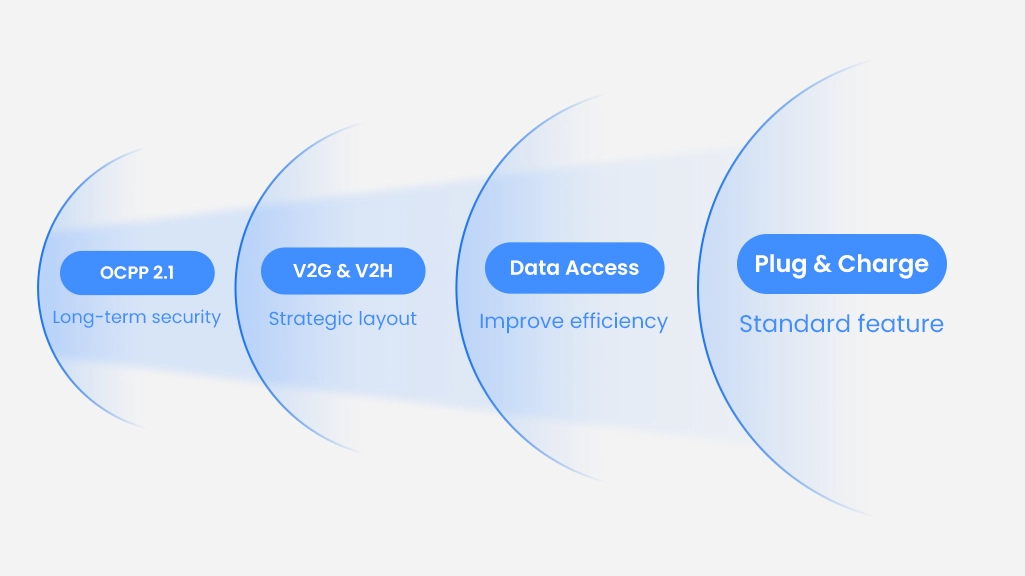
Vehicle-to-grid (V2G) and vehicle-to-home (V2H) services will also play a growing role in EV fleet electrification strategies. While large-scale V2G revenues may still be limited in 2026, fleets that ignore bidirectional charging risk excluding themselves from future flexibility markets. As a result, "V2G-ready" infrastructure is rapidly becoming a baseline requirement rather than an innovation project.
Vehicle-to-grid (V2G) and vehicle-to-home (V2H) services will also play a growing role in EV fleet electrification strategies. While large-scale V2G revenues may still be limited in 2026, fleets that ignore bidirectional charging risk excluding themselves from future flexibility markets. As a result, "V2G-ready" infrastructure is rapidly becoming a baseline requirement rather than an innovation project.
Interoperability remains a critical risk area. Differences in OEM implementations, charge point software, and backend platforms continue to complicate ISO 15118 and OCPP deployments. Fleet operators must carefully navigate the transition from OCPP 1.6 to OCPP 2.0.1 and eventually OCPP 2.1 to avoid stranded assets and ensure long-term service compatibility.
Smart Charging and Energy Management: Why Controlling the Electron Matters
Smart charging and energy management will define the economic success of EV fleet electrification in 2026.
As EV charging hardware becomes increasingly commoditised, fleet operators will derive value from software-driven control rather than physical infrastructure. Smart charging enables fleets to optimise when vehicles charge, how much power is delivered, and how charging aligns with operational schedules, electricity prices, and grid constraints.
For fleet operators, controlling peak demand and shifting energy consumption away from high-tariff periods can significantly reduce operating costs. More advanced fleets will integrate EV charging with on-site solar generation, battery energy storage systems, and participation in flexibility or balancing markets. In this environment, EV fleets transition from passive energy consumers to active grid participants.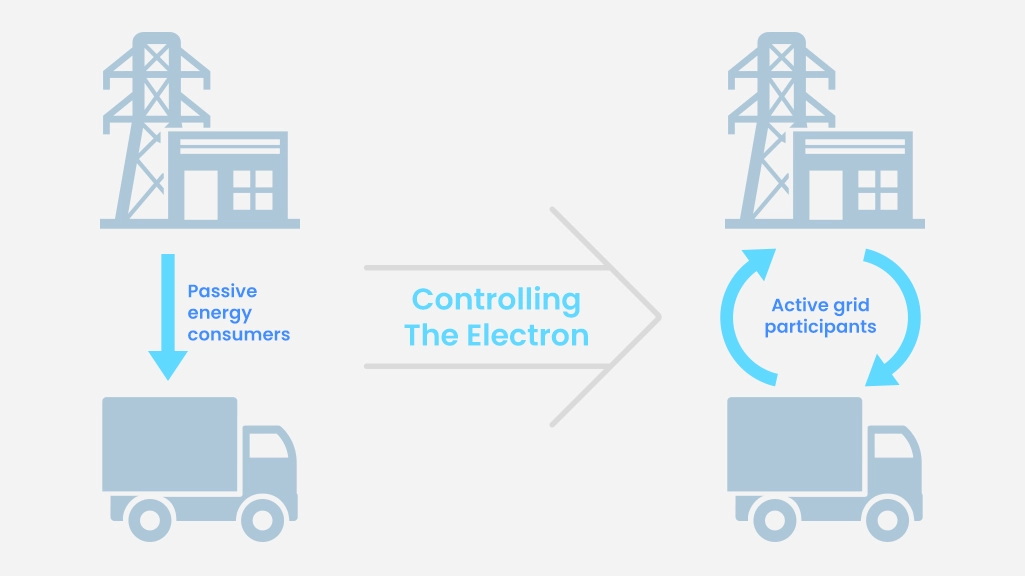
This evolution highlights the importance of “controlling the electron.” Fleet operators must understand where electricity is sourced from the grid, renewable generation, stationary storage, or vehicles and how it should flow across the site in real time. Decisions around energy routing, charging speed, and timing are now as critical as vehicle dispatch and route planning.
Without intelligent energy management platforms, fleet electrification strategies risk being undermined by rising electricity costs and grid capacity limitations. In 2026, static charging schedules and manual oversight will no longer be viable at scale.
EV Fleet Electrification Regulation in the UK and EU: What Fleet Operators Must Prepare For
Regulation will become a defining factor for EV fleet electrification in the UK and EU from 2026 onwards.
As fleet operators deploy large volumes of EV charge points alongside other electrical smart appliances, such as battery storage, heat pumps, and photovoltaic systems, they increasingly fall within the scope of grid stability, resilience, and cybersecurity regulation. Governments and regulators are recognising that large EV fleets now form part of critical national energy infrastructure.
For fleet operators, this shift brings new compliance obligations. Secure device architecture, controlled remote access, robust software update mechanisms, data protection, and incident response planning will all face heightened scrutiny. Cybersecurity risks associated with connected EV charging systems are no longer hypothetical and are becoming a regulatory concern.
"Security by design" is therefore transitioning from a competitive advantage to a minimum requirement. Legislative frameworks are expected to take clearer shape during 2026, with enforcement accelerating from 2027. Fleet operators that delay compliance planning may face costly retrofits, operational disruption, or regulatory penalties.
What Fleet Operators Must Get Right for EV Fleet Electrification in 2026
EV fleet electrification in 2026 is no longer a hardware deployment challenge, it is a systems integration challenge.
Fleet operators that succeed will be those that:
1.Enable vehicle-based digital services through ISO 15118 and interoperable charging standards
2.Invest in smart charging and energy management to control costs and unlock flexibility
3.Embed regulatory compliance and cybersecurity into fleet infrastructure from the outset
The transition to electric fleets is not simply about replacing internal combustion vehicles with electric alternatives. It is about building intelligent, flexible, and compliant energy-driven operations.
At ULandPower, we see 2026 as a critical inflection point for EV fleet electrification. Fleet operators that get these fundamentals right will turn electrification into a long-term competitive advantage. Those that do not risk creating operational complexity that undermines the promise of electric mobility.
Frequently Asked Questions (FAQ)
1. What is the biggest challenge for EV fleet electrification in 2026?
The biggest challenge for EV fleet electrification in 2026 is system integration. Fleet operators must connect vehicles, charge points, energy management software, and regulatory compliance into a cohesive operational framework. Without this, scaling fleets efficiently becomes difficult and costly.
2. Why is ISO 15118 important for fleet operators?
ISO 15118 is critical for fleet operators because it enables Plug & Charge, automated authentication, and future V2G capabilities. Using ISO 15118-compliant vehicles and chargers allows fleets to simplify billing, enhance operational control, and maintain interoperability across different vehicle and charging vendors.
3. Is V2G commercially viable for fleets in 2026?
Vehicle-to-grid (V2G) is increasingly relevant for fleet operators in 2026. Depot-based fleets with predictable schedules can monetize flexibility through peak shaving, grid services, and backup power. Fleets not equipped for V2G may miss future revenue opportunities and flexibility market participation.
4. How does smart charging reduce fleet operating costs?
Smart charging allows fleet operators to schedule EV charging during low-tariff periods, manage peak demand, and optimise energy from renewable or storage systems. Integrating smart charging into fleet operations can significantly reduce total cost of ownership and improve energy efficiency.
5. What regulations should fleet operators prepare for in the UK and EU?
Fleet operators should anticipate stricter regulations for EV fleet electrification in the UK and EU, including cybersecurity, grid stability, and operational resilience requirements. From 2026, large-scale EV fleet deployments will increasingly fall under compliance scrutiny, with enforcement likely from 2027.
6. Why is cybersecurity critical for EV fleets?
As connected EV fleets integrate with the grid and remote platforms, cybersecurity becomes essential. Weaknesses in software or network security can affect fleet operations, energy reliability, and data privacy. Regulators are increasingly considering cybersecurity as a core compliance requirement.
Table of Contents >
- 1. Introduction
- 2. EV Fleet Electrification and Vehicle-Enabled Services: What Fleet Operators Must Enable
- 3. Smart Charging and Energy Management: Why Controlling the Electron Matters
- 4. EV Fleet Electrification Regulation in the UK and EU: What Fleet Operators Must Prepare For
- 5. What Fleet Operators Must Get Right for EV Fleet Electrification in 2026
- 6. Frequently Asked Questions (FAQ)