Contact Us

Picking the right Level 2 EV charger is less about buying hardware and more about making a smart business call. Drivers just want charging they can count on overnight. Property owners? They need install costs they can predict, safe operation, and energy performance they can actually measure. According to the International Energy Agency, global public charging points passed 4 million by the end of 2023. And more than 360,000 public chargers got added that same year.
The market is growing fast—but it's not exactly even. Things like charging speed, grid capacity, connector standards, software support, and local certification can all sway your decision. The U.S. Department of Energy says Level 2 equipment runs on 208–240-volt circuits. Depending on the vehicle and the electrical setup, it can add about 10 to 60 miles of range per hour. Of course, real-world results vary.
Tom Moloughney, founder of State of Charge, calls Level 2 charging “the workhorse of EV charging.” That sums up its everyday role pretty well—especially at homes, workplaces, hotels, and apartment buildings. That said, this guide isn't going to pretend one charger fits every market. A unit that's perfect for a suburban garage might struggle commercially in a busy fleet depot. Sometimes slower really is smarter. A Level 3 DC Fast Charger may serve highway traffic better, but it usually needs more electrical capacity and a bigger investment. Drawing on data from the International Energy Agency, the U.S. Department of Energy, and real-world purchasing considerations, this guide helps global buyers compare charging power, safety features, connectivity, installation demands, warranty terms, and total ownership costs—so they can judge with a clearer head.
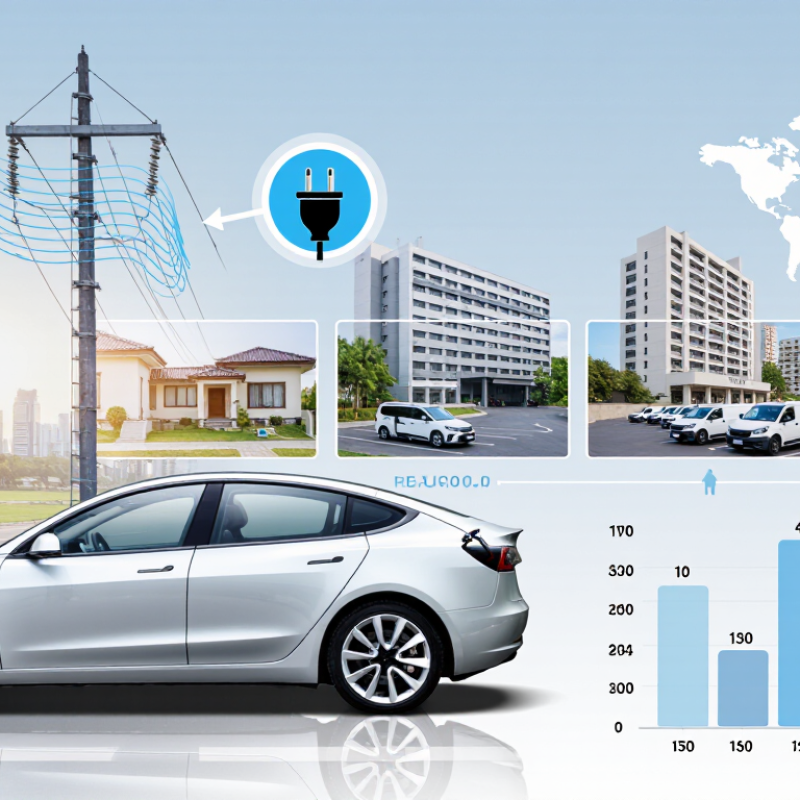
A Level 2 EV charger uses 208–240 volts of alternating current, unlike a standard household outlet. It sends power through charging equipment, then the vehicle’s onboard charger converts AC into DC. The battery stores that energy. Simple in principle.
Most home units deliver between 3.6 and 19.2 kilowatts, depending on the circuit, vehicle, and charger settings. A 7.2-kilowatt system may add roughly 25–35 miles of range per hour. Actual results vary. Battery size, temperature, charging losses, and battery percentage all affect performance. Charging usually slows near full capacity to protect the battery.
Installation needs careful planning. A qualified electrician should check the panel capacity, cable route, grounding, and required protective devices. Many systems need a dedicated circuit, not a shared garage outlet. Connector standards also differ by market, so buyers should confirm vehicle compatibility before ordering. The equipment may be powerful, but it cannot exceed the vehicle’s onboard charging limit. That detail is often overlooked. A 19.2-kilowatt charger will not make a vehicle accept 19.2 kilowatts.
The charger’s label can also create false confidence. Weather protection, cable length, load management, and operating temperature matter in daily use. I would not choose the highest rating automatically. A properly installed 7.2-kilowatt unit may be more practical than a larger system that requires expensive electrical upgrades. Check local electrical requirements before installation.
Level 2 chargers use a dedicated AC circuit at approximately 208–240 volts in North America or 230 volts in many other markets. The nominal charging power shown here is calculated from voltage × current ÷ 1,000. Actual power may be lower because of vehicle limits, electrical installation constraints, charging losses, and regional regulations.
The displayed current values represent common Level 2 charging configurations; availability depends on the local electrical system and the vehicle’s onboard AC charger.
Choosing a Level 2 EV charger starts with the vehicle, not the charger label. Check your EV’s maximum AC charging rate in the owner’s manual. A vehicle accepting only 7.2 kW gains little from an 11 kW charger. Extra capacity may still support future vehicles, but it will not make today’s car charge faster.
Your home electrical system is the second limit. A typical Level 2 unit uses 208–240 volts and may draw 16, 32, or 48 amps. A 48-amp charger can require a 60-amp dedicated circuit under common installation practices. The available panel capacity matters more than its total amp rating. Electricians should review existing heating, cooking, and laundry loads before selecting equipment. Do not guess here.
Small details change the result. A 32-amp charger can add roughly 25 to 30 miles of range per hour, depending on the EV and conditions. Cold weather, battery temperature, and charging losses reduce that figure. Cable length also matters; excessive length can create awkward routing and unnecessary cost. A simple rule is not always enough. I would rather choose a modest charger that fits the panel safely than install maximum power with no practical benefit. Local electrical requirements and installation methods must also be checked by a qualified professional. Planning for overnight charging is often more sensible than chasing the highest advertised output.
Choosing a Level 2 EV charger starts with the connector, not the screen or mobile app. Connector standards vary by region, so check your vehicle inlet and local charging infrastructure first. Type 2 is common in many markets, while CCS1 and CCS2 support different regional systems. A compatible connector should lock firmly, resist moisture, and remain easy to release with cold hands. Do not assume an adapter solves every problem. Some adapters reduce convenience, safety, or charging performance.
Cable design matters during daily use. A 5-meter cable suits most driveways, but a longer cable may prevent awkward parking. Thicker cables usually handle higher current, yet they feel heavier and require better storage. Look for temperature monitoring, overcurrent protection, ground-fault detection, and weather resistance. These features matter more than decorative displays. A Level 3 Dc Charger can charge faster, but it also demands different electrical planning and usually costs more.
Tips: Ask a licensed electrician to inspect the panel, grounding, and cable route before installation. Confirm the charger’s input voltage and maximum current match your property. Check regional certification requirements and warranty support. In shared buildings, load management can prevent several vehicles from overloading one circuit. My practical preference is simple: choose a reliable cable and clear safety controls before smart features. I still reconsider cable length on every project; extra reach sounds helpful, but loose cable loops can create trip hazards and wear.
Choosing a Level 2 Charger starts with your parking routine, not the advertised charging speed. The IEA’s Global EV Outlook 2024 reported nearly 14 million electric car sales in 2023, showing why home charging decisions now affect millions of drivers. A hardwired model suits a dedicated parking space and offers a cleaner wall finish. However, installation may require an electrician, load assessment, and local permit checks. Fit matters.
Plug-in models usually connect through a compatible 240-volt outlet, making replacement or relocation easier. Portable chargers add flexibility for travel, but their cables can become awkward in rain, gravel, or a crowded garage. Check connector fit, cable length, weather protection, and storage before buying. Portability wins sometimes. The U.S. Department of Energy notes that Level 2 equipment can deliver substantially faster charging than standard household outlets, but actual results depend on vehicle limits and circuit capacity.
Smart chargers can schedule charging during lower-cost periods, track energy use, and respond to utility signals. The International Energy Agency expects global public charging capacity to expand sharply through 2035, yet home charging remains important for daily use. I would not pay extra for every app feature. Weak Wi-Fi can make a “smart” device frustrating. A careful comparison should include warranty terms, safety certification, temperature performance, and installer experience. One overlooked detail is cable handling; a heavy cable placed across a walkway creates a daily nuisance.
| Comparison Dimension | Smart Level 2 Charger | Portable Level 2 Charger | Hardwired Level 2 Charger | Plug-In Level 2 Charger |
|---|---|---|---|---|
| Best Use Case | Connected home charging, energy monitoring, scheduled charging, and remote control. | Home and travel use where charging locations or outlets may change. | Permanent residential or commercial installation with maximum installation stability. | Home charging using an existing, correctly rated outlet and a removable connection. |
| Typical AC Input | Commonly single-phase 208–240 V in North America; approximately 220–240 V in many other markets. | Usually supports a defined voltage range, such as 200–240 V; exact compatibility depends on the model. | Typically connected directly to a dedicated 208–240 V or 220–240 V circuit. | Uses a matching 240 V-class or 220–240 V receptacle; some models also support lower-current configurations. |
| Typical Maximum Current | 16–48 A, with software or installation settings often used to limit output. | 16–40 A is common; adjustable current settings are useful when using different circuits. | 32–80 A may be available, although the vehicle and electrical service determine the usable limit. | 16–40 A is common, limited by the receptacle, circuit rating, plug type, and installation settings. |
| Approximate Maximum Power | About 3.8–11.5 kW on a 240 V supply, depending on the configured current. | About 3.8–9.6 kW on a 240 V supply, depending on the current setting. | About 7.7–19.2 kW at 240 V for 32–80 A equipment; many vehicles accept less. | About 3.8–9.6 kW at 240 V for 16–40 A equipment. |
| Charging Speed | Usually adds approximately 25–75 km of range per hour, depending on vehicle efficiency, voltage, current, and battery limits. | Usually adds approximately 25–60 km of range per hour under comparable conditions. | Can provide the highest available AC charging rate when the vehicle and electrical system support it. | Usually similar to a comparable hardwired unit at the same current, but often configured for moderate power. |
| Installation Requirement | Requires a dedicated circuit, suitable overcurrent protection, correct grounding, and reliable Wi-Fi or cellular connectivity for online features. | Requires a suitable outlet or approved wiring arrangement; installation should still be checked by a qualified electrician. | Requires professional electrical installation and a dedicated circuit; no user-accessible plug connection is used. | Requires a properly installed, compatible receptacle and dedicated circuit. A standard household outlet is generally not suitable for Level 2 power. |
| Electrical Protection | Look for ground-fault protection, overcurrent protection, overtemperature monitoring, and protection against abnormal voltage conditions. | Look for integrated ground-fault protection, temperature monitoring at the plug, and clear fault indicators. | Look for ground-fault protection and installation-compatible protection; the upstream circuit protection remains essential. | Look for ground-fault protection, plug-temperature monitoring, and a correctly sized circuit breaker and receptacle. |
| Connectivity and Controls |
Wi-Fi / App / Scheduling May support charging schedules, energy reports, firmware updates, load management, and user access control. |
Often has a local display or control buttons; app connectivity may be optional rather than standard. | May include smart functions, but connectivity depends on the selected equipment and the installation location. | Usually offers simple local controls; some models add Wi-Fi, Bluetooth, or app-based scheduling. |
| Load Management | Often suitable for dynamic load management or scheduled charging when compatible with the electrical system. | Adjustable current can help reduce circuit demand, but advanced automatic load balancing is less common. | Best suited to fixed high-capacity circuits and integrated load-management systems designed for permanent installations. | May support manual current adjustment; automatic load balancing depends on the equipment and electrical installation. |
| Portability | Low to medium. Usually wall-mounted, although some connected units can be removed by an electrician. |
High Designed to be transported, with interchangeable plugs or adapters on some models. |
Low. Intended to remain in one location for long-term use. | Medium. The charger can be disconnected, but the compatible outlet must be available at the destination. |
| Cable and Plug Considerations | May use a fixed vehicle connector and a permanently installed supply cable; connector standards vary by market and vehicle. | Commonly includes a carrying case and a replaceable or interchangeable supply plug; adapters must be approved for the charger’s current. | Usually has a permanently connected supply cable and vehicle connector; cable management should be planned during installation. | Uses a detachable or fixed mains plug that must match the outlet, voltage, frequency, and current rating of the destination country. |
| Vehicle Connector Compatibility | Common options include Type 1, Type 2, and SAE J1772-compatible connectors; verify the vehicle inlet before purchase. | Available with different regional vehicle connectors; a passive adapter may not resolve electrical or communication incompatibility. | Connector choice is normally fixed at purchase or installation; select the version required by the vehicle and local regulations. | Connector choice varies by market; the vehicle-side connector and supply-side plug are separate compatibility checks. |
| Weather and Outdoor Use | Outdoor use is possible when the enclosure, connector, mounting, and installation are rated for the local environment. | Useful outdoors, but the portable unit, plugs, and connections must be protected from standing water, heat, impact, and contamination. | Often the most secure option for outdoor locations when permanently installed with suitable weather protection. | Outdoor operation depends on the enclosure and receptacle rating; exposed plug connections require particular care. |
| Space and Cable Management | Needs wall space, cable storage, and a stable Wi-Fi signal if online functions are required. | Needs safe storage for the unit, cable, and adapters; frequent handling can increase wear on connectors. | Offers the cleanest permanent setup but needs careful routing and mounting during installation. | Requires room around the outlet and a secure way to support the cable and charger body. |
| Typical Upfront Cost Pattern | Equipment cost is often higher because of communications, monitoring, and software features. | Equipment cost varies with included plugs, display functions, current range, and carrying accessories. | Installation cost can be higher because of wiring, conduit, wall work, permits, and possible service upgrades. | May reduce installation work when a suitable outlet already exists, but installing a new high-current outlet can reduce the cost advantage. |
| Maintenance and Reliability | Requires occasional software updates and network troubleshooting in addition to normal cable and connector inspection. | Requires inspection of cables, adapters, plugs, and the portable enclosure after transport or outdoor use. | Fewer user-handled electrical connections can reduce wear, but fixed wiring and protection devices should be inspected when needed. | Repeated plugging and unplugging can wear the receptacle and plug; inspect for heat discoloration, looseness, or damage. |
| Global Buyer Checklist | Confirm voltage, frequency, phase, connector standard, app availability, data privacy, local certification, and regional support. | Confirm plug type, adapter approval, voltage range, current adjustment, connector standard, transport requirements, and local certification. | Confirm electrical service capacity, local code, permitting, earthing system, connector standard, weather rating, and installer availability. | Confirm receptacle standard, circuit capacity, plug temperature limits, voltage and frequency, connector type, and local safety certification. |
| Primary Advantages | Advanced control, charging schedules, energy visibility, remote monitoring, and potential integration with energy-management systems. | Flexible use, easy transport, adjustable current, and reduced dependence on one charging location. | Stable permanent installation, strong cable management, low connection handling, and potential for higher output. | Convenient removal, easier relocation than a hardwired unit, and potentially simpler installation when the correct outlet is already present. |
| Primary Limitations | Higher complexity, dependence on connectivity for some features, and possible software or subscription considerations. | More handling and storage, higher risk of plug or adapter damage, and fewer advanced control features on basic models. | Less flexible after installation, higher installation commitment, and possible need for professional electrical work. | Outlet quality becomes critical, connection points may wear, and power is limited by the existing receptacle and circuit. |
| Recommended Buyer Profile | Owners who value data, scheduling, remote control, solar or load-management integration, and long-term energy optimization. | Drivers who travel frequently, rent property, use multiple locations, or need a backup charging solution. | Owners seeking a durable primary charger for a dedicated parking space and a clean, permanent installation. | Owners with a verified compatible outlet who want a removable charger without committing to a hardwired installation. |
Buying a Level 2 Ev Charger is only the beginning. Installation requirements vary by voltage, property type, and local electrical codes. A qualified electrician should inspect the distribution board, calculate available load, and confirm whether a dedicated 240-volt circuit is suitable. Older homes may need panel upgrades, not just a larger breaker.
The cable route matters. Keep it protected from vehicle movement, moisture, and sharp edges. Outdoor equipment needs weather resistance, secure mounting, and correct drainage. Safety devices may include ground-fault protection, residual-current protection, or surge protection, depending on local rules. Do not rely on an adapter to solve a wiring problem. It can hide a dangerous fault.
Permits and inspections are often required before energizing the circuit. Some regions also require utility notification, approved disconnects, or specific metering arrangements. Requirements may differ between a private home, apartment parking area, and commercial site. Ask the local authority for written guidance. Online advice can be outdated.
A practical check is simple. Test the charger, cable, socket, and emergency shutoff under supervision. Leave space around the unit for ventilation and maintenance. One common mistake is assuming a familiar plug standard works everywhere. I would recheck that assumption, especially after moving countries. Installation records, circuit ratings, and inspection documents should remain accessible for future repairs.
A dependable Level 2 charger starts with electrical fit, not headline power. Check your home voltage, circuit capacity, plug type, and local installation rules. A 7.2 kW unit may suit a 32-amp, 230-volt circuit, while North American homes often use 240 volts. The phrase “Level 2 Charger Kw” should describe real output, not only marketing potential. The International Energy Agency reported more than 4 million public charging points worldwide at the end of 2023. Yet global plugs, grid frequencies, and communication requirements still vary sharply.
Compare total ownership cost. Include the charger, wiring, protective devices, installation, software, and possible replacement parts. Reliability depends on thermal control, weather protection, cable flexibility, and tested safety functions. Look for evidence linked to recognized standards, such as IEC 61851, and clear certification records. A longer warranty matters only when exclusions are understandable. Check coverage for the cable, connector, screen, network service, and labor. Warranty response times are often overlooked. That may become expensive.
Tips: Request a written load assessment before purchase. Test the cable at freezing temperatures if your region faces winter. Ask whether firmware updates work without a permanent internet connection. The U.S. Department of Energy estimates that most electric-vehicle charging occurs at home, but household conditions differ. I would not trust a charger solely because it feels heavy or has many app features. Independent test data is stronger. Confirm connector compatibility, regional support, and service availability before paying.
It uses 208–240 volts of alternating current. The vehicle converts that power before storing it in the battery. Simple in principle.
Home units commonly provide 3.6–19.2 kilowatts. A 7.2-kilowatt unit may add about 25–35 miles hourly.
The vehicle reduces power near full capacity to protect the battery. Temperature and battery percentage also affect speed.
No. The vehicle’s onboard charger sets the practical limit. A 19.2-kilowatt unit cannot force an EV to accept 19.2 kilowatts.
An electrician should inspect panel capacity, cable routing, grounding, and protective equipment. A dedicated circuit is often necessary.
Check the EV’s maximum AC rate first. Then review heating, cooking, laundry, and other household loads.
Not always. A properly installed 7.2-kilowatt unit may suit overnight charging better than an expensive electrical upgrade.
Hardwired units suit fixed parking spaces. Plug-in models are easier to relocate. Portable units help during travel but need careful cable storage.
Scheduling and energy tracking can be useful. Weak Wi-Fi may make the experience frustrating. I would not pay for every feature.
Check connector compatibility, cable length, weather protection, temperature performance, certification, warranty, and installer experience. Heavy cables can become a daily nuisance.
This Level 2 EV Charger buying guide explains how these chargers deliver faster and more efficient home charging than standard outlets by using higher electrical power. It helps global buyers match charging capacity with their vehicle’s maximum input rate, battery needs, and available home electrical service. Key selection factors include connector type, cable length, weather protection, display and connectivity options, load management, and essential safety functions such as ground-fault protection and overcurrent control.
The guide also compares smart, portable, hardwired, and plug-in models, outlining the advantages and limitations of each design. It emphasizes the importance of professional installation, correct circuit sizing, ventilation where required, and compliance with local electrical rules. Finally, buyers learn how to assess total cost, charging efficiency, build quality, warranty coverage, replacement support, voltage and frequency compatibility, and practical use across different regions. The goal is to choose a reliable, safe, and appropriately powered charger for long-term electric vehicle ownership.