
Mexico EV Charging Market
Residential and Commercial AC Charging Opportunities
Introduction
Mexico’s strongest evidence for residential and commercial AC charging points toward places where vehicles already park for extended periods. The IEA reports that plug-in car sales tripled in 2025, with plug-in hybrids representing nearly 60% of those sales. Separately, EMA figures reported by local media show that private connections accounted for approximately 92.8% of Mexico’s charging points at the end of 2025. Together, these findings support prioritizing routine charging at homes and managed parking sites, with power selected around actual vehicle requirements and parking time.[1][2]
For charging brands, distributors, installers and property operators, the opportunity also depends on who controls equipment procurement, which connectors vehicles use and how much electrical capacity a site can allocate. This article connects the market evidence to those decisions. Recommendations are editorial analysis; calculations are identified as illustrative assumptions rather than measured project results.
What the Mexico EV charging market data actually measures
The first distinction is between electrification and external charging. This article focuses on battery electric vehicles, or BEVs, and plug-in hybrid electric vehicles, or PHEVs. Conventional hybrids, or HEVs, should not be counted as customers for external charging simply because a sales release groups them under electrified vehicles. The IEA electric-car figures cited here cover BEVs and PHEVs.[1]
The following indicators describe different things: new vehicle sales, installed infrastructure and respondents’ charging habits. Keeping those denominators separate prevents a growing vehicle market from being mistaken for an equivalent number of available charger orders.
|
Indicator and period |
Evidence |
Implication for AC charging |
|
Plug-in share of new car sales in 2025 |
Above 7%, versus around 2% in 2024 [1] |
The customer base is growing; sales are not equipment orders |
|
PHEV share of plug-in car sales in 2025 |
Nearly 60%; PHEV sales increased sevenfold [1] |
Vehicle AC acceptance and daily energy requirements matter |
|
Charging connections at year end 2025 |
56,726 total, including 52,666 private and 4,060 public [2] |
Private connections represent a calculated 92.8% |
|
Home charging in EMA’s 2026 user survey |
Residential charging has an established usage base |
|
|
Equipment used in the same survey |
68% use a 220V wall-mounted charger [3] |
Product selection needs to reflect actual site supply |
Infrastructure and reported habits point toward charging during routine parking. However, private is an access category covering homes, businesses and dealerships; it is not an AC power classification. Likewise, the 66% and 68% survey findings are separate measures. They cannot be added together or used to estimate nationwide installations.[2][3]
Why a PHEV majority changes AC charger selection
With PHEVs accounting for nearly 60% of Mexico’s plug-in car sales in 2025, the amount of energy needed during a parking window deserves attention before maximum charger output. A product range planned entirely around large-battery BEVs may overlook a substantial part of the new customer base.[1]
PHEV battery size, onboard AC charging capability and support for DC charging vary by model. An AC charger rated above a vehicle’s onboard limit will not make that vehicle charge at the charger’s full rating. Distributors therefore need technical information for the vehicle models and years they expect to serve, rather than a price ladder based only on 7kW, 11kW and 22kW labels.
This does not establish one ideal power level for all PHEVs. Short parking windows, fleet operations and BEVs with suitable onboard chargers can justify higher output. The decision should follow the energy requirement, vehicle capability and time available.
Vehicle sales also pass through several filters before becoming equipment demand. A buyer may receive a charger with the vehicle, retain an existing unit or lack permission to install one. A distributor assessing the residential opportunity should investigate how many customers need a separately purchased charger, have an installable parking space and can be reached through its channel. One new plug-in vehicle should not automatically become one independently available charger sale.
Residential charging extends from individual homes to shared buildings
Residential charging has the clearest local evidence. Mexico Business News, citing EMA, reported 52,666 private charging connections at the end of 2025, with nearly 42,000 installed in homes. EMA’s second national electromobility survey covered 2,097 BEV and PHEV users; reporting on that survey found that 66% usually charged at home and 68% used a 220V wall-mounted charger.[2][3][4]
For a household with its own parking space, the purchase depends on installation suitability, dependable operation and support. Spanish-language installation information and clear responsibility for commissioning and faults can affect a local partner’s delivery costs. Where suitable equipment is already installed, replacement or service may create an opportunity, but that is different from a first-installation sale.
Shared residential buildings introduce another buyer and another problem. After several residents install chargers independently, later requests may encounter constrained shared capacity, competing cable routes or uncertainty over electricity allocation. Property managers then need to decide who may charge, how much power each space receives and how usage is recorded.
The commercial implication is to prepare separate offers for individual homes and shared buildings. The first needs a clear installation scope and support arrangement. The second needs an expansion plan covering capacity allocation, usage records and the addition of future parking spaces. This is an inference from established residential deployment and shared electrical constraints, not a claim that the survey measured a particular national multifamily market share.
Which commercial parking sites are suitable for AC charging
Commercial AC is most plausible where vehicles remain long enough to receive useful energy and an identifiable operator can manage the service. Public charging is not exclusively DC: a media account of EMA’s first-half 2026 figures lists 3,061 public AC connections and 1,592 public DC connections. AC represents roughly two-thirds of those reported components. The article’s public total differs from their sum by two connections, so those figures should not be used as a precise market-size estimate.[5]
Existing connections establish that destination AC has a role. They do not prove that every retail or hospitality site can support a viable installation. The following priorities are site-selection recommendations, not a measured national ranking of returns.
|
Setting |
Conditions favoring AC |
Likely buyer or operator |
First question to resolve |
|
Workplace or business parking |
Predictable employee or vehicle dwell time |
Employer, campus or property manager |
How many vehicles need energy each day and what capacity is available |
|
Hotel or accommodation |
Guest stays cover an overnight window |
Hotel owner or operator |
Whether charging influences bookings and how occupied bays are managed |
|
Shared residential garage |
Assigned parking and recurring use |
Property manager, developer or owners’ association |
Installation rights, allocation of costs and future expansion |
|
Retail or other destination |
Visits allow meaningful replenishment |
Property owner, operator or partner CPO |
Effective charging time, willingness to pay and bay turnover |
A hotel may treat charging as part of its accommodation service, while an employer may provide it for staff or company vehicles. Neither necessarily expects electricity sales to recover every cost. Assessments should separate charging revenue, parking revenue and other business benefits rather than treating improved customer experience as measured incremental income.
For retail sites, footfall alone is insufficient. Operators need to understand how many visitors drive plug-in vehicles, need energy and stay long enough to use AC charging. An initial deployment can record energy per session, charging duration and total bay occupancy. Those observations provide a more credible basis for expansion than total visitor numbers.
Why Chinese imports do not determine the connector mix
The IEA estimates that 85% of plug-in cars sold in Mexico in 2025 were imported from China, up from just over 60% in 2024. It also reports that BYD captured more than 70% of Mexico’s plug-in car sales in 2025. The first figure describes manufacturing and import origin; the second describes brand concentration. Neither measures connector share.[1]
Local supplier CS Energy’s compatibility guide identifies Type 1, Type 2, NACS and GB/T AC configurations across vehicles in the market, while noting that compatibility can vary by version. The guide is useful evidence of selection complexity, but it does not replace manufacturer confirmation for a specific vehicle, model year and market specification.[6]
This creates a practical inventory decision. New sales may concentrate in a few brands, while service demand includes older vehicles and different import channels. Stocking a single connector based on country of manufacture risks incompatibility; stocking every option without demand evidence ties up working capital. Distributors should build a local vehicle and connector list from inquiries, installation records and fleet rosters, then use that evidence to allocate inventory.
Record AC and DC interfaces separately, together with onboard AC acceptance and any approved adapter restrictions. DC labels such as CCS1 or CCS2 should not be used as the complete connector specification for an AC equipment order. Adapters also require compatibility checks rather than a blanket assumption of interoperability.
How 220V supply changes the comparison of charger ratings
Rated power needs a stated voltage, wiring arrangement and current. Mexico’s NOM-001-SEDE-2012, section 110-4, lists several voltage systems, including 120/240V, 220Y/127V and 480Y/277V. This does not mean every building offers every supply, or that all circuits described as 220V have the same phase and neutral arrangements.[7]
The table calculates single-phase input power at a power factor of one, using voltage multiplied by current. It illustrates the effect of voltage at the same current, rather than confirming a particular product’s suitability.
|
Current |
At 240V |
At 220V |
|
32A |
7.68kW |
7.04kW |
|
40A |
9.60kW |
8.80kW |
|
48A |
11.52kW |
10.56kW |
A unit described as approximately 11.5kW at 240V and 48A has a theoretical input of 10.56kW at 220V and the same current. That calculation is relevant only if the equipment explicitly permits the actual voltage and wiring, and if vehicle, circuit and protection requirements are satisfied. Input power is also different from power delivered into the battery.
Equipment comparisons should state connector, permitted input voltage, frequency, phases and wiring, current and the resulting power under those conditions. A product’s electrical suitability and a project’s installation compliance require separate confirmation. Local engineering review should address grounding, protection and continuous-load requirements.[7]
Size around the parking window and the energy task
A useful opportunity in managed parking is to match allocated power to the charging task. Consider an illustrative workplace with ten cars, each needing 12kWh delivered into its battery during an eight-hour stay. These are assumed values, not measured Mexican averages.
The combined task is 120kWh, requiring an average battery-side power of 15kW. If overall efficiency from site input to battery is assumed to be 90%, average input power would be approximately 16.7kW. Ten ports individually rated at 11kW would have a combined nameplate rating of 110kW.
The difference identifies potential scheduling flexibility. It does not establish that a 16.7kW supply is sufficient for the project. Vehicles may arrive together or leave early, chargers have minimum operating currents, and other building loads change. Design must also address phase allocation, electrical protection and appropriate reserve capacity.
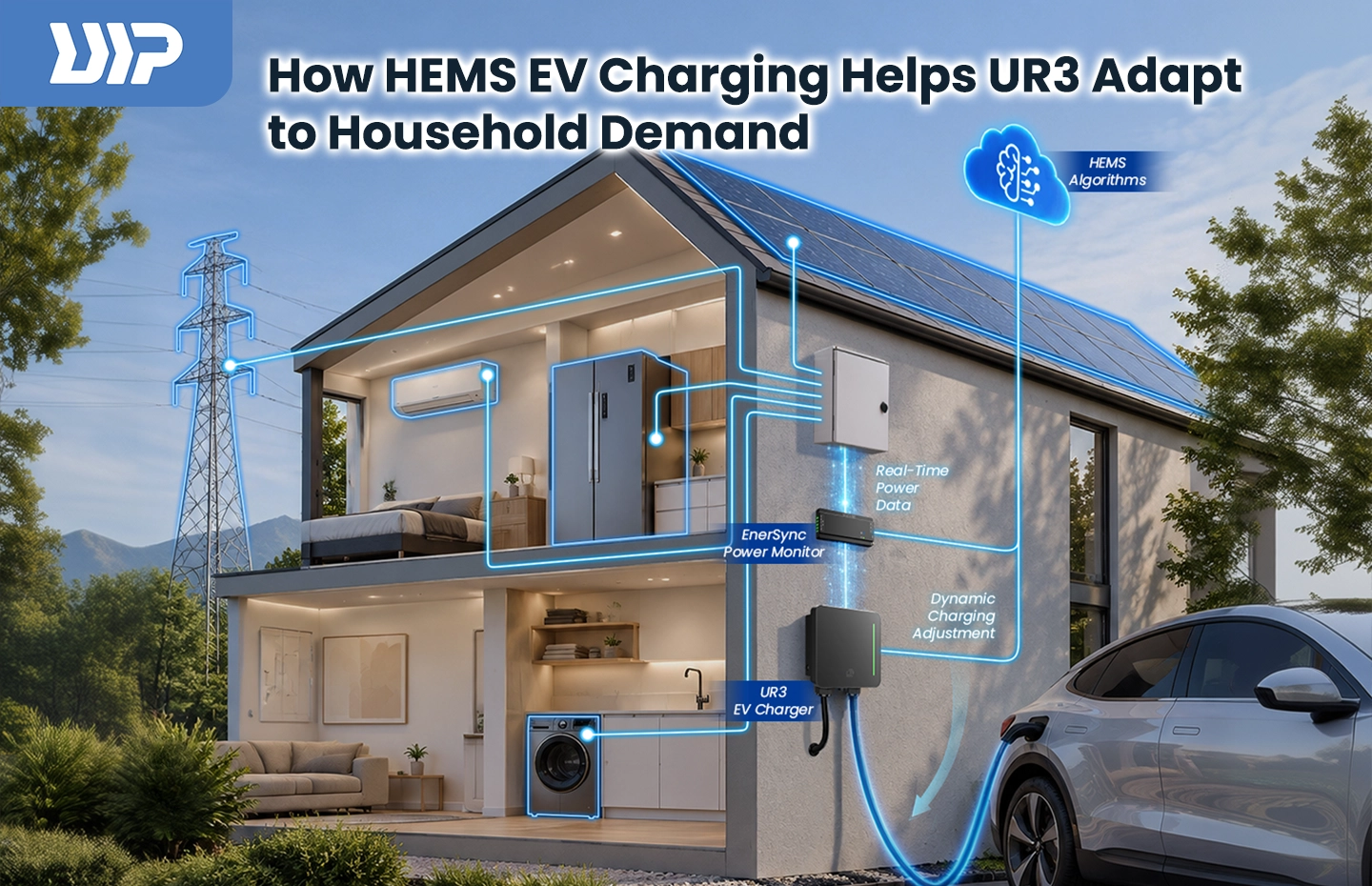
Property operators should define the service they intend to provide before selecting energy management. Dynamic load management can allocate charging power within available capacity; whether it meets departure requirements needs validation against actual vehicle schedules and load profiles. It cannot automatically eliminate necessary electrical upgrades or substantiate a fixed percentage saving without project evidence.
What charging brands and distributors should do first
The evidence supports starting with residential and managed parking applications. It does not establish an unrestricted independent equipment market. BYD’s concentration in new plug-in sales makes it particularly useful to investigate who controls bundled equipment, dealership installation and replacement purchases. Concentrated sales can create repeat supply opportunities, but they can also keep orders inside established channels.[1]
For partners that can purchase repeatedly, proposals should cover delivery costs beyond the unit price: installation guidance, commissioning support, spare parts and warranty responsibilities. Commercial projects also need agreement on metering, user permissions, backend integration and offline operation. Where OCPP is required, specify the version, functions and interoperability testing, while distinguishing protocol support from certification.
Begin with a configuration brief grounded in a real project: target vehicles and connectors, equipment-side supply, parking windows, energy requirements and the purchasing party. Use that brief to select residential channels, shared-building projects or destination partners before committing to inventory. National statistics establish direction; project evidence determines the investment.
ULandPower works with charging brands, distributors and project partners on complete-unit OEM, ODM and white-label supply. For a Mexico AC charging evaluation, bring the target vehicle list, supply information and parking scenario to a discussion of available configurations, technical validation and local delivery responsibilities. Specific capabilities and compliance scope depend on the selected model and project confirmation.
Frequently asked questions
Is there evidence of residential AC charging demand in Mexico
Yes. EMA figures reported by local media place nearly 42,000 private charging connections in homes at the end of 2025. Reporting on its 2026 user survey found that 66% of respondents usually charged at home. These findings support the application, but do not directly predict next year’s equipment orders.[2][3]
Are all private charging connections AC
No. Private describes access, while AC describes the type of electrical supply. Private connections represented a calculated 92.8% of Mexico’s charging connections at year end 2025; that figure is not an AC market share.[2]
Which AC connector should a Mexico project specify
Confirm the exact vehicle model year, market version and import channel. Local configurations include Type 1, Type 2, NACS and GB/T AC. Chinese manufacture does not by itself establish a GB/T interface.[1][6]
Should a commercial site buy the highest power AC charger available
Only when vehicle acceptance, energy needs and parking time justify it. Long stays can allow power allocation across vehicles, while shorter replenishment windows may require higher power or a different AC versus DC decision.
Can national connection counts establish a project return
No. Project economics also require equipment and installation costs, utilization, electricity prices, tariffs charged to users and operating expenses. Destination charging may serve accommodation or employee benefits; direct revenue and other business value should be evaluated separately.
Sources and methodology
This article was rebuilt from the Mexico research reports in this project, led by the vehicle import and brand structure edition of 21 October 2026, with the voltage and wiring and connector editions as supporting research. The public sources below were reopened for verification. Data periods are stated beside each claim; the review date does not imply that all statistics run through October 2026.
The survey sample was 2,097 users. Its 66% and 68% findings describe respondents and are not presented as nationally representative population estimates. The 92.8% figure is calculated as 52,666 divided by 56,726, rounded to one decimal place. Capacity examples use transparent assumptions and are not field measurements.
The September 2026 media article lists 4,655 public connections but AC and DC components totaling 4,653. Its national total is 60,934, while the earlier project report used 60,932 based on the components. This article avoids the disputed national total and precise share. The same media article also mixes first-half and January-to-July vehicle-sales series that cannot be directly reconciled; those series are not used here to calculate a 2026 sales mix or forecast.[5]
[1] IEA Global EV Outlook 2026 Trends in electric cars. 2026. Primary research supporting 2025 growth, new-car penetration, PHEV mix, import origin and BYD sales share. Read source
[2] Mexico Business News Mexico EV Charging Network Grows 26% in 2025 EMA. 26 January 2026. Secondary reporting of EMA infrastructure figures, including year-end 2025 connections and residential deployment. Read source
[3] AutoDinámico Autos eléctricos en México satisfacción récord entre conductores en 2026. 4 June 2026. Secondary reporting of EMA’s survey, supporting home charging and 220V wall-mounted charger use. Read source
[4] Energy21 BYD Tesla y Volvo dominan la preferencia de autos eléctricos en México. 27 May 2026. Secondary reporting identifying the second national electromobility survey and its 2,097 BEV and PHEV participants. Read source
[5] Mexico Business News Record EV Sales Face Grid and Import Bottleneck. 9 September 2026. Secondary reporting of EMA; only the identified public AC and DC components are used, with the internal discrepancy disclosed. Read source
[6] CS Energy Compatibilidad de cargadores eléctricos por marca en México. 22 May 2026. Local commercial technical guidance used for connector context; vehicle manufacturer documentation remains the authority for a specific configuration. Read source
[7] Mexico official standard text NOM 001 SEDE 2012. In particular section 110-4. Used for the distinction between supply systems and installation conditions, not as proof of product certification. Read source