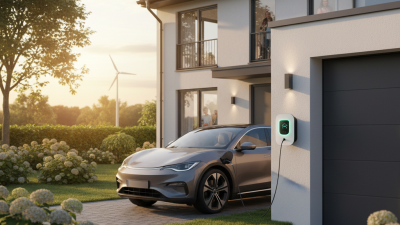
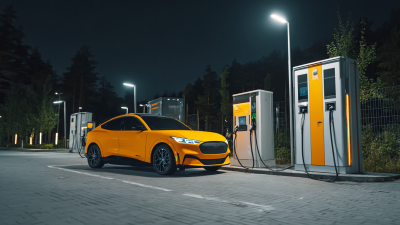
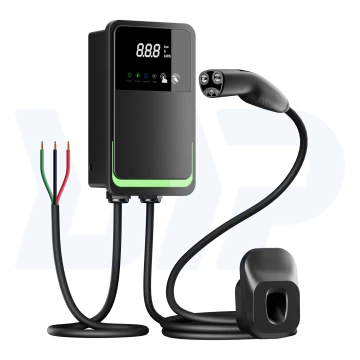
China has really stepped up as a key sourcing hub for electric vehicle charging adapters. Their manufacturers supply everyone—home users, fleet operators, installers, and car distributors alike. But, honestly, picking a reliable supplier isn’t just about scrolling through online prices. You’ve gotta look beyond that. Things like how well the product fits your needs, safety standards, consistent manufacturing, and good after-sales support are just as important.
In this guide, I’ll walk you through some of China’s main suppliers, including names like Teison, BESEN, SETEC Power, and a few others who specialize in this stuff. Their offerings include everything from Type 2 to Type 1 adapters, NACS solutions, portable EV chargers, and connector accessories. When you’re shopping, pay close attention to specs like rated current, voltage range, cable length, connector temperature, IP ratings, and mechanical robustness. Those tiny details really matter—a loose connector, for example, can mess up your charging, especially in winter or during heavy use.
And if you really want to make sure you’re getting quality, practical checks are a must. Don’t just rely on sales brochures—ask for current test reports, factory photos, sample units, warranty info, and references from the factory. Make sure the specs they promise match what you actually receive. Sometimes, sample units look top-notch but later batches might not be quite the same, so it’s worth keeping an eye on that. To minimize risks, you might also want to consider factory audits, independent inspections, and clear standards for accepting products. And keep in mind that certification rules change depending on where you plan to use the products, so it’s smart to double-check requirements with local experts or testing agencies.
Remember, no supplier review or ranking is set in stone. Prices, materials, certifications, and production capacity can shift pretty quickly. So, think of this overview as a helpful starting point, rather than a final say. It’s all about doing your homework to find the best fit for your needs.
What Are Electric Vehicle Charging Adapters?
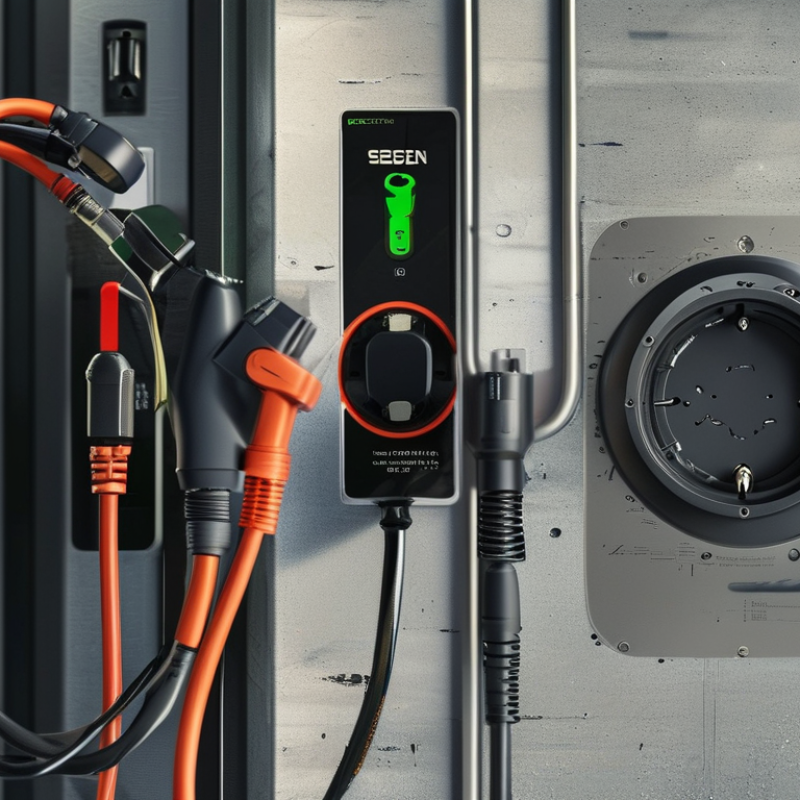
Electric vehicle charging adapters connect a vehicle inlet with a charging plug or power source. They can support home charging, public stations, or emergency use. A suitable adapter must match the vehicle connector, charger output, voltage, and current rating. It should also fit firmly, without looseness or visible gaps. During supplier checks, examine material quality, contact design, temperature control, and test documentation. A low price means little if the adapter becomes hot after twenty minutes.
Tesla Charging Adapters may appear in searches, but compatibility must be verified carefully. Connector shape alone is not enough. Charging communication, grounding, weather resistance, and regional electrical requirements also matter. Experienced buyers should request product drawings, inspection records, and sample testing before placing large orders. Ask whether the supplier controls production or simply resells products. That detail can affect consistency.
Tips: Test a sample with the intended vehicle and charger. Check the plug after use. Warm is normal; excessive heat is not. Keep the adapter dry, clean, and free from damaged pins. Never force a mismatched connector. A supplier should explain operating limits clearly, including outdoor use and storage conditions. In practice, even a well-designed adapter can fail when users ignore cable strain or repeated impacts. I would also review the instructions twice, because small wording differences can create expensive mistakes.
How Do EV Charging Adapters Differ by Standard and Use?
China Top Electric Vehicle Charging Adapters Suppliers?
Charging adapters differ by electrical standard, connector shape, communication protocol, and charging purpose. AC adapters usually support home or workplace charging. They convert physical connector formats, but they do not always change voltage or charging speed. DC fast-charging adapters require closer protocol compatibility. They must coordinate voltage, current, cooling, and battery communication. The International Energy Agency reported more than 14 million electric car sales worldwide in 2023. It also recorded over 4 million public charging points globally. This growth makes cross-standard compatibility increasingly important, especially for imported vehicles.
Common systems include Type 1, Type 2, CCS, GB/T, and NACS. Type 1 is common in some North American applications. Type 2 is widely used across Europe and many international markets. GB/T remains significant in China. CCS combines charging and communication functions for high-power DC use. An adapter may fit physically but still fail electronically. That is a costly misunderstanding. The CharIN interface guidance emphasizes communication compatibility, not only connector matching. The IEA’s Global EV Outlook 2024 also notes that fast-charging deployment is expanding rapidly, increasing the need for reliable equipment testing.
Tips: Check the vehicle inlet, charger output, phase type, and local voltage before purchasing. Confirm whether the adapter supports AC or DC charging. Look for thermal protection, insulation testing, and recognized safety certification. A small label matters. Keep the cable dry and inspect pins for heat marks. Specifications can be incomplete, so supplier documentation deserves careful questioning.
This chart compares common EV charging connector standards by typical charging output used in mainstream installations. AC standards are mainly used for home and destination charging, while DC fast-charging standards are designed for rapid public charging. Actual power depends on the vehicle, charger, electrical supply, and adapter configuration.
Which Features Define a Reliable Chinese Charging Adapter Supplier?
A reliable Chinese charging adapter supplier should prove performance, not merely display attractive specifications. For Ev Charger Adapters, ask for test reports covering voltage stability, heat resistance, insulation, and repeated connection cycles. A serious supplier can explain test conditions clearly. Vague answers deserve caution.
Compatibility is equally important. The adapter should match the vehicle inlet, charging station, cable rating, and regional electrical requirements. Check connector dimensions, locking strength, weather protection, and temperature behavior during extended charging. A sample unit can reveal loose contacts or excessive warmth within minutes. Small details matter.
Reliable suppliers also maintain traceable production records. They should identify material batches, inspection points, and responsible quality personnel. Clear drawings and updated technical documents show professional control. Ask how rejected components are handled. Ask again if the answer sounds rehearsed. A factory audit, independent inspection, or small trial order can reduce uncertainty before larger purchasing decisions. No supplier gets every detail right, and a polished website cannot replace evidence. Some buyers, including experienced ones, trust certificates too quickly. I would compare the certificate scope, testing date, and actual product model before approval. Responsive after-sales support matters as well, especially when field feedback exposes a connector fault or confusing installation instruction.
How Are China’s Leading EV Charging Adapter Suppliers Evaluated?
China Top Electric Vehicle Charging Adapters Suppliers?
How Are China’s Leading EV Charging Adapter Suppliers Evaluated?
Evaluating China’s leading EV charging adapter suppliers requires more than comparing catalog prices. A dependable supplier demonstrates practical experience through load tests, connector inspections, and installation feedback from different climates. Test the sample. Check housing fit, pin alignment, cable flexibility, and locking force by hand. Small defects often become daily problems.
Technical credibility appears in documented testing. Suppliers should explain current ratings, temperature limits, insulation performance, ingress protection, and communication compatibility clearly. Independent laboratory reports carry more weight when their numbers match the delivered sample. Traceable production records also matter. Review incoming inspections, batch coding, material certificates, and corrective-action procedures. A supplier that answers quickly but avoids evidence deserves caution.
Reliability is also measured after shipment. Strong suppliers provide installation guidance, response times, replacement procedures, and engineers who understand charging faults. A useful evaluation should test adapters repeatedly under controlled loads, then inspect heat marks and connector wear. Yet no checklist is perfect. Field conditions vary, and one successful test cannot prove long-term durability. Suppliers should welcome uncomfortable questions and publish design limitations. I would also record failures honestly, because testing assumptions can be wrong. A failure log should remain open until the revised adapter survives another round of testing.
What Certifications and Safety Standards Should Buyers Check?
When evaluating China-based electric vehicle charging adapter suppliers, buyers should verify certifications before comparing prices. A Commercial Electric Vehicle Charging Station needs compatible, current safety evidence, not only a printed certificate logo. Check whether the equipment follows IEC 61851 for charging systems and IEC 62196 for plugs, sockets, and vehicle connectors. Regional approvals may include UL standards for North America, CE requirements for Europe, or UKCA requirements for the United Kingdom.
Ask suppliers for complete test reports, certificate numbers, issuing laboratories, and matching model numbers. The certificate should cover the exact adapter, cable length, connector design, and rated current. Also inspect protection against electric shock, overheating, short circuits, leakage current, and incorrect grounding. IP ratings matter outdoors, while IK ratings help assess resistance to impact. Look for residual current protection and temperature sensors where the design requires them.
A factory audit adds useful evidence. Review incoming material records, production testing, calibration dates, and serial-number traceability. Request samples from normal production, not specially prepared units. I once treated a neat certification list as sufficient. That was a poor assumption. A supplier may hold a valid certificate for an older model, while selling a revised version. Ask difficult questions. Check the answers twice. Even small differences in connector temperature or cable insulation can affect field safety. Each document should match the product in your hands.
How Can Buyers Compare Pricing, Customization, and Support?
China’s top suppliers of Electric Vehicle Charging Solutions should be compared beyond the quoted unit price. The IEA Global EV Outlook 2024 reports over four million public charging points worldwide by the end of 2023. China represented about 2.7 million of them. This scale creates strong manufacturing experience, but quality still varies.
Ask for a complete landed-cost sheet. Include adapter price, tooling, packaging, freight, taxes, and testing fees. Compare identical specifications, not attractive sample prices. Check connector materials, cable temperature ratings, ingress protection, and test reports for applicable IEC requirements. Customization also needs proof. Request a physical sample, wiring diagram, logo placement drawing, and production timeline. A cheaper adapter may become expensive after redesigns.
Tips: Require three quotations with matching specifications. Test samples under heat, moisture, and repeated connection cycles. Confirm a written warranty and replacement process. Ask how quickly engineers answer technical questions. A 24-hour reply sounds useful, but it is not the same as solving a fault.
Support should be measured like a service contract. Request response-time targets, spare-part availability, firmware or compatibility guidance, and inspection records. The U.S. Department of Energy notes that charging reliability depends on equipment performance and network uptime, not hardware alone. In practice, buyers often underprice support. I have seen procurement teams focus on five cents per adapter, then lose weeks waiting for corrective documents. That comparison was incomplete. Suppliers should disclose production capacity, inspection checkpoints, and corrective-action procedures before the purchase order.
High-Performance UN1 AC EV Charger: 80A Fast Charging, Smart Features, and Supplier Selection Guide
North American EV adoption is increasing the need for dependable commercial charging. The International Energy Agency’s *Global EV Outlook 2024* reported that global electric car sales reached nearly 14 million in 2023, with approximately one in five new cars sold being electric. In this environment, the UN1 AC EV charger provides a practical high-performance solution, delivering up to 80A and 19.2 kW at 240V. It is available with either NACS or Type 1 connectors, in 40A, 48A, and 80A versions, supporting installations in commercial parking areas, hotels, offices, and corporate campuses.
The charger combines fast Level 2 performance with operational flexibility. According to the U.S. Department of Energy’s Alternative Fuels Data Center, Level 2 charging can provide substantially faster replenishment than standard household charging, making it suitable for vehicles parked for several hours. The UN1 supports wall or pedestal installation, OCPP 1.6J with an upgrade path to 2.0.1, and connectivity through Wi-Fi, Ethernet, Bluetooth, or optional 4G. A dynamic digital display and customizable U-shaped LED indicator improve usability, while personalized housing and logo options support architectural integration.
For supplier selection, buyers should evaluate certification, environmental protection, software capability, and after-sales support together. With ETL, FCC, and Energy Star approvals, an IP65/IK08 enclosure, and a three-year warranty, the UN1 is designed for demanding outdoor and semi-outdoor environments while offering the configuration flexibility required by North American commercial charging projects.
FAQS
Request test reports for voltage stability, heat resistance, insulation, and repeated connections. The supplier should explain test conditions clearly. Vague answers deserve caution.
Match the adapter with the vehicle inlet, charging station, cable rating, and regional electrical requirements. Check connector size, locking force, weather protection, and temperature behavior. A sample often reveals loose contacts within minutes.
Examine housing fit, pin alignment, cable flexibility, and locking force by hand. Run the adapter under controlled load. Look for excessive warmth, heat marks, or connector movement.
Ask for material batches, inspection points, batch codes, and responsible quality personnel. Review how rejected components are isolated and handled. A polished website is not evidence.
Request current ratings, temperature limits, insulation results, ingress protection, and communication compatibility. Compare laboratory reports with the delivered sample. Numbers must match reality.
Build a complete landed-cost sheet covering tooling, packaging, freight, taxes, and testing fees. Compare identical specifications, not attractive sample prices. A cheap adapter can become expensive after redesigns.
Request installation guidance, response-time targets, replacement procedures, and spare-part availability. Ask whether engineers can investigate connector faults. Fast replies are not enough.
No. Field conditions vary, and a single test may hide weaknesses. Repeat testing under heat, moisture, and connection cycles. Keep a failure log. Review assumptions honestly.
Conclusion
Electric Vehicle Charging Adapters are essential accessories that help connect electric vehicles to different charging stations, plugs, and regional power standards. Their design may vary according to connector type, charging level, voltage, current capacity, and intended use, including home charging, workplace charging, and public charging environments. Understanding these differences enables buyers to select an adapter that is compatible, efficient, and safe for their vehicle and charging equipment.
When evaluating Chinese suppliers, buyers should consider product quality, manufacturing capability, technical experience, customization options, delivery reliability, and after-sales support. Important safety checks include relevant electrical certifications, insulation performance, temperature protection, overload protection, waterproof ratings, and compliance with applicable international and regional standards. A thorough comparison should also examine pricing transparency, minimum order quantities, testing procedures, packaging, warranty terms, communication efficiency, and the supplier’s ability to provide stable solutions for different markets. Balancing cost with safety, durability, compatibility, and service is the key to making a dependable purchasing decision.
 Contact Us