Contact Us
Look, picking a reliable EV charger manufacturer isn't about brand names or hype – it's a practical call. The company you go with will directly impact safety, how fast your charges are, how often you need maintenance, and whether your customers trust you. So what should you expect from a solid manufacturer? Clear specs, real testing records you can trace, and support that actually responds when you need help.
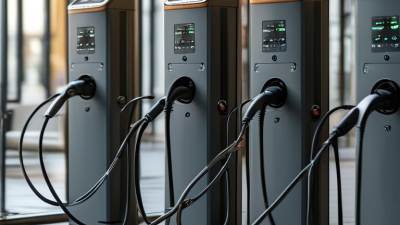
Ever really looked at the hardware? I mean, like, really looked. You've got these tough enclosures that can take rain, dust, and getting banged around outside all the time. And cables? They stay flexible even after you've charged your phone every night for months. Plus, some devices have temperature monitoring inside, which is nice because it can help prevent overheating during marathon charging sessions. And good manufacturers—they'll actually tell you the real power ratings, not just the flashy numbers, and they don't hide the limitations either. That's a big deal, honestly.
You know, a lot of the real experience only shows up after you've installed everything. So having a supplier you can trust is key—they should handle firmware updates, spare parts, guide you through installation, and even help with fault diagnosis. Those little things can save you from costly downtime down the road. And if you're working on a commercial project, don't forget to ask about load management, payment systems, network compatibility, and how they protect user data. If RFID access is a must, it's worth taking a look at a few different RFID EV charger manufacturers before you decide. Honestly, you really want to double-check things like card compatibility, how the software control works, and what the replacement procedure looks like — you don't want any surprises down the road.
Look, no supplier is perfect—even the big names sometimes leave you waiting on parts or keep their support boundaries a bit vague. That's why you really need to check out independent reviews, get your hands on sample units, look at warranty terms, and talk to people who've used their gear in reference projects. A shiny brochure just won't cut it. Go chat with installers who've actually had to service that equipment in the field. Trust me, they'll tell you about connector wear, confusing interfaces, or slow response times that you'd never spot otherwise.
Look, when it comes to EV chargers, the manufacturers you can actually trust? They've earned that trust, not just claimed it. They show you the receipts — they document how their stuff performs, they're upfront about any hiccups, and when something goes wrong, they actually fix it and get better. That said, don't take their word for it. You've gotta do your own homework — verify those claims. It might feel like a hassle now, but believe me, a little due diligence can save you from a world of pain (and money) down the road. Reliability isn't something you buy off the shelf; it's built up over time, one successful charging session at a time.
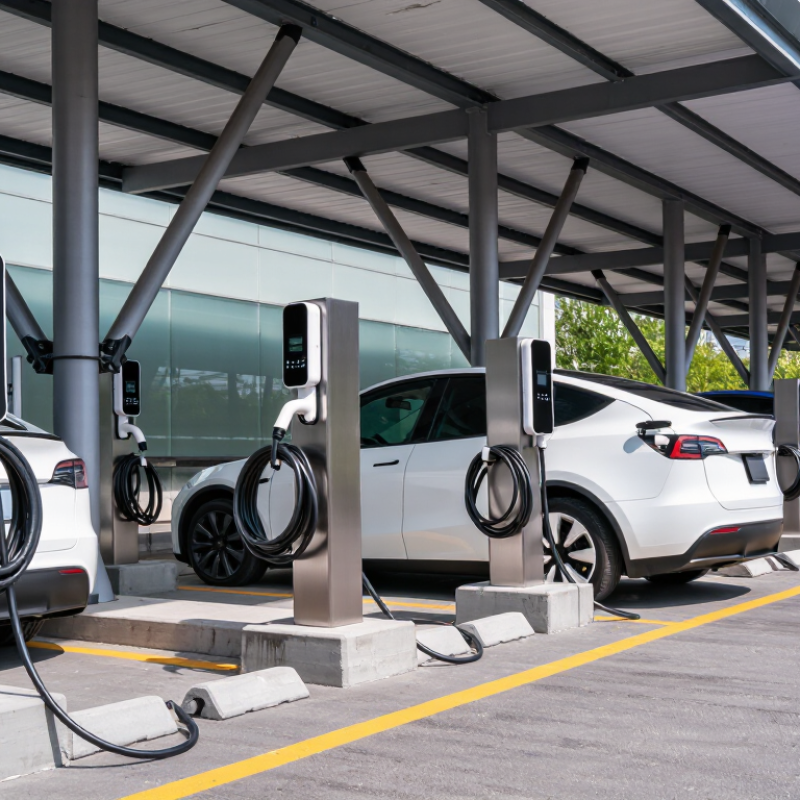
A trusted EV charger manufacturer proves its claims through practical design and consistent field performance. For Commercial Ev Charging Station Manufacturers, selection begins with evidence, not polished advertising. Engineers should explain charging capacity, connector standards, enclosure protection, and thermal controls in clear language. In field experience, small details matter. Cable strain relief, readable status lights, and secure mounting can affect daily reliability. Technicians should also receive installation guides with wiring diagrams, torque values, and fault-check procedures. Photos of real testing facilities can add useful credibility.
Look for documented testing under heat, rain, dust, vibration, and repeated charging cycles. A serious supplier shares operating limits instead of hiding them. It should publish firmware procedures, network requirements, and compatibility information before purchase. Independent testing matters. Clear warranty terms should identify response times, replacement conditions, and excluded damage. Support should include trained technical staff, not only automated replies. A real engineer may admit when a site needs extra electrical capacity. Vague promises do not help.
Trust also depends on traceability. Manufacturers that record component batches can investigate failures more effectively. They should explain how software updates are controlled and how customer data is protected. No manufacturer gets every decision right. That is worth remembering. A charger may perform well in a factory test but struggle in a crowded parking area. Honest documentation should mention installation limits, maintenance intervals, and known weaknesses. Those details help installers plan around problems before drivers encounter a dark screen or a delayed session.
Choosing trusted EV charger manufacturers is not only about price or charging speed. It is about engineering decisions that remain reliable after thousands of plug-in cycles. The IEA’s Global EV Outlook 2024 reported more than four million public charging points worldwide in 2023, with public charging capacity still expanding rapidly. This growth increases pressure on equipment quality, installation guidance, and technical support.
Experienced Commercial Electric Car Charging Stations Manufacturers usually test chargers under heat, moisture, vibration, and repeated load changes. They also document protection systems, connector performance, communication protocols, and software updates. A charger may look impressive in a showroom. Its internal cooling path matters more beside a dusty parking lot. The U.S. National Renewable Energy Laboratory has repeatedly highlighted interoperability and uptime as practical challenges for charging networks. Poor communication between vehicles, chargers, and payment systems can create frustrating failures.
Ask for test records, operating-temperature ranges, fault-recovery procedures, and field-service response times. Certifications are useful, but they do not replace evidence from real installations. That distinction matters. A manufacturer can claim high efficiency while offering weak maintenance support. I have also seen specifications hide assumptions about cable length, ambient temperature, or simultaneous charging. Those details deserve direct questions. No supplier gets everything right, and published data can still leave gaps. Careful buyers should compare measured performance, warranty terms, software control, and long-term service capacity before approving a large deployment.
Choosing a trusted EV charger manufacturer begins with safety compliance, not attractive housing or charging speed. A charger should meet IEC 61851 requirements for conductive charging and use connectors compliant with IEC 62196. In some markets, additional certification may be required under UL or equivalent national standards. These rules address electrical protection, communication, temperature control, and abnormal operating conditions. A reliable manufacturer should provide clear test reports, traceable components, and installation guidance. Paperwork matters, but it is not everything.
Tips: Check the charger’s rated voltage, current, and ingress protection level. Confirm that residual-current protection suits the local electrical system. Ask whether the unit includes overcurrent, overvoltage, overheating, and ground-fault protection. Inspect the cable for firm insulation and secure connector locking. Small details matter.
Electromagnetic compatibility testing is also important. A poorly designed charger may disturb nearby equipment or respond badly to voltage changes. Trusted manufacturers normally conduct repeated tests, not one convenient laboratory check. They should explain firmware updates and corrective actions when faults appear. Standards can differ between regions, so local certification must be verified before purchase. Even experienced buyers can overlook earthing conditions or an unsuitable circuit breaker. That is worth reconsidering. A compliant charger still needs professional installation, regular inspection, and sensible use.
Choosing a trusted EV charger manufacturer matters most when software controls the physical flow of electricity. Smart load balancing measures household demand and reduces charging power before a breaker trips. That small adjustment protects circuits while preserving useful charging time. The IEA’s Global EV Outlook 2024 reported more than four million public charging points worldwide at the end of 2023. It also recorded over 1.3 million additions during that year.
Reliable units combine dynamic scheduling, remote diagnostics, temperature monitoring, and power sharing. Open communication protocols can help operators update settings without sending technicians onsite. The U.S. Department of Energy’s Alternative Fuels Data Center identifies Level 2 equipment up to 19.2 kilowatts. Smart controls can distribute that capacity across several vehicles instead of overloading one circuit. Drivers notice the difference at 7 a.m.: fewer failed sessions and more predictable battery range. That is performance, not decoration.
Still, smart charging is not magic. An inaccurate meter, weak network connection, or poor tariff schedule can delay a needed departure. Manufacturers should publish test results, cybersecurity practices, firmware policies, and service response times. Installers should verify these claims under real site conditions. Field experience often exposes gaps that product brochures omit. I would question any dashboard showing perfect savings; local traffic and weather change the result. Transparent data logging makes those imperfections visible.
Choosing a trusted EV charger manufacturer means examining more than charging speed or enclosure design. Warranty and technical support often determine whether an installation remains dependable years later. Small print matters. A strong warranty clearly states coverage length, eligible components, labor terms, replacement procedures, and shipping responsibilities. In practical installations, chargers face heat, dust, voltage changes, and repeated daily use. A low purchase price can become expensive when one failed circuit board causes weeks of downtime. Buyers comparing Ev Manufacturers Usa should request real warranty examples before signing a contract.
Technical support should begin before the charger arrives. Skilled engineers can review electrical loads, cable sizes, grounding plans, and network requirements. After installation, support teams should interpret error codes, examine diagnostic logs, and guide safe testing. Fast answers matter. Silence is costly. A useful service channel may include phone assistance, email tickets, remote diagnostics, and clear escalation times. I have seen installers lose hours because a support team sent generic instructions instead of checking the actual fault history.
Trusted manufacturers also provide firmware procedures, installation manuals, and training for service technicians. They keep essential replacement parts available instead of treating every failure as a new purchase. No support process is perfect. Delays happen, and unclear tickets can still occur. That weakness should be acknowledged openly. Ask how problems are tracked, who approves replacements, and whether technical help continues after the warranty ends. Reliable support is not a promise alone; it is visible in response records, practical documentation, and accountable people.
| Evaluation Dimension | Documented Reference Point | What to Verify Before Purchase | Why It Matters |
|---|---|---|---|
| Standard Warranty Term | 24–60 months is a common published range for commercial EV charging equipment, depending on the product and installation conditions. | Confirm the start date, covered parts, labor coverage, shipping responsibility, and exclusions. | A clearly defined warranty reduces unexpected repair and replacement costs over the equipment life cycle. |
| Warranty Scope | A complete warranty should address major components such as the charging module, connector, cable, display, communication hardware, and enclosure. | Check whether replacement parts, remote diagnosis, onsite labor, and return transport are included. | A long warranty has limited value if critical components or service labor are excluded. |
| Technical Support Response | A practical support program commonly defines separate targets for acknowledgement, diagnosis, and resolution rather than using one general response promise. | Request written service levels for critical outages, normal faults, escalation, and after-hours assistance. | Clear service levels help operators estimate downtime and maintain charging availability. |
| Remote Diagnostics | Remote monitoring can identify communication failures, abnormal temperatures, charging interruptions, and error codes without an immediate site visit. | Verify access to event logs, alarms, firmware status, remote reset, and role-based support access. | Remote troubleshooting can shorten diagnosis time and reduce unnecessary field-service visits. |
| Communication Compatibility | OCPP 1.6 and OCPP 2.0.1 are widely used application protocols for communication between charge points and management systems. | Confirm the supported OCPP version, implemented functions, cybersecurity controls, and interoperability test results. | Open communication compatibility can reduce dependence on one software platform. |
| Electrical and Charging Safety | IEC 61851 covers conductive charging system requirements; IEC 62955 addresses residual direct current detection for certain AC charging equipment. | Request applicable declarations, test reports, protection details, and installation requirements for the target market. | Verified safety design helps protect users, vehicles, property, and electrical infrastructure. |
| Availability Target | 99.5% annual availability permits approximately 43.8 hours of downtime per year; 99.9% permits approximately 8.8 hours. | Define how availability is calculated, which outages are excluded, and whether planned maintenance is reported separately. | A measurable availability definition makes supplier performance easier to compare. |
| Spare Parts Support | Long-term serviceability depends on the availability of replaceable items such as contactors, cables, connectors, cooling components, and communication modules. | Ask for expected parts availability, lead times, authorized repair procedures, and end-of-life notification periods. | Accessible spare parts can extend equipment service life and reduce total ownership cost. |
| Firmware and Software Updates | Connected chargers may require updates for security, bug fixes, communication compatibility, and operational improvements. | Confirm update frequency, approval controls, rollback procedures, data protection, and any associated fees. | Controlled updates help maintain security and compatibility throughout the product life cycle. |
| Installation and Commissioning | Correct cable sizing, protection settings, grounding, ventilation, network configuration, and commissioning are essential for reliable operation. | Verify installation manuals, installer training, commissioning checklists, and post-installation acceptance testing. | Professional commissioning reduces avoidable faults that may otherwise be mistaken for product defects. |
| Service Documentation | Useful documentation normally includes installation instructions, wiring diagrams, error-code definitions, maintenance procedures, and warranty terms. | Check whether documents are current, searchable, available in the required language, and accessible after purchase. | Accurate documentation enables faster troubleshooting and safer maintenance. |
| Total Cost of Ownership | Total cost includes purchase, installation, electricity, network services, preventive maintenance, repairs, replacement parts, and downtime. | Compare warranty coverage, support fees, service labor, parts pricing, software charges, and expected maintenance requirements. | A reliable support structure may provide better long-term value than a lower initial purchase price. |
Note: Warranty periods, service levels, availability targets, and compliance requirements vary by product, market, installation environment, and contract. Always verify the latest written terms and applicable local regulations before purchase.
Choosing Electric Car Charging Stations Manufacturers requires more than comparing charging speed and price. Start by checking their technical experience with public, workplace, and residential installations. Ask for test reports, safety certifications, and clear compliance records. Reliable manufacturers explain their results without hiding limitations.
Study the charger’s practical design. Check connector compatibility, weather resistance, load management, software updates, and emergency shutdown features. Review the warranty in detail. Does it cover replacement parts, labor, and communication failures? Ask how quickly technical support responds. Request references from sites with similar traffic and climate conditions. A short pilot installation can reveal overheating, unclear instructions, or unstable software before wider deployment.
Look beyond the sales brochure. Examine factory quality controls, component traceability, and final inspection procedures. Confirm whether the manufacturer supports common communication protocols and provides usable maintenance data. Independent laboratory testing adds credibility, but it does not replace field evidence. Visit an operating site if possible. Observe cable handling, screen visibility, payment reliability, and cleaning needs.
The cheapest option may become expensive. Downtime is rarely shown in the initial quote. I would also question unusually long performance claims, because real conditions are messy. Some manufacturers communicate well during sales but respond slowly after installation. That risk deserves attention. Compare total ownership costs, service capacity, spare-part availability, and upgrade policies before choosing a supplier.
Experienced manufacturers test chargers through heat, moisture, vibration, and repeated plug-in cycles. A reliable unit must survive ordinary parking lots, not only showrooms.
Ask for records covering temperature ranges, load changes, connector performance, and fault recovery. Field data matters more than attractive specifications. Some information may still be incomplete.
Chargers should follow IEC 61851 for conductive charging and use connectors aligned with IEC 62196. Local certification may add further requirements.
Check for overcurrent, overvoltage, overheating, ground-fault, and suitable residual-current protection. Confirm compatibility with the local circuit breaker.
Ingress protection indicates resistance to dust and water. Choose a rating suited to the installation location, especially outdoors. Dusty sites need careful attention.
Chargers must communicate reliably with vehicles, payment systems, and network software. Poor communication can cause failed sessions, payment errors, or unnecessary downtime.
No. Certification supports safety claims, but it does not prove strong maintenance or field performance. Compare test evidence, warranty terms, and service response times.
Check cable length, ambient temperature, earthing conditions, circuit capacity, and simultaneous charging assumptions. These details can change real charging performance. Buyers sometimes assume too much.
Ask about firmware updates, corrective actions, spare parts, and technician response times. A charger may work well initially, then struggle without practical support.
Choosing trusted ev charger manufacturers is essential for obtaining safe, reliable, and efficient charging equipment. A reputable manufacturer is defined by proven industry experience, consistent product quality, transparent certifications, and a clear commitment to innovation. Their expertise affects every stage of charger development, from electrical design and durability to energy management and user convenience. Reliable chargers should meet recognized safety and performance standards, include protection against common electrical risks, and be tested for dependable operation in different environments.
Smart features can further improve charging performance through real-time monitoring, load management, scheduling, usage data, and remote control. However, advanced functions are most valuable when supported by stable software and secure connectivity. Warranty coverage and responsive technical support also help reduce downtime and protect long-term investment. When evaluating manufacturers, buyers should compare product specifications, safety certifications, installation requirements, warranty terms, support services, customization options, and overall operating costs. A careful assessment helps ensure the selected charging solution matches present needs while remaining adaptable for future expansion.